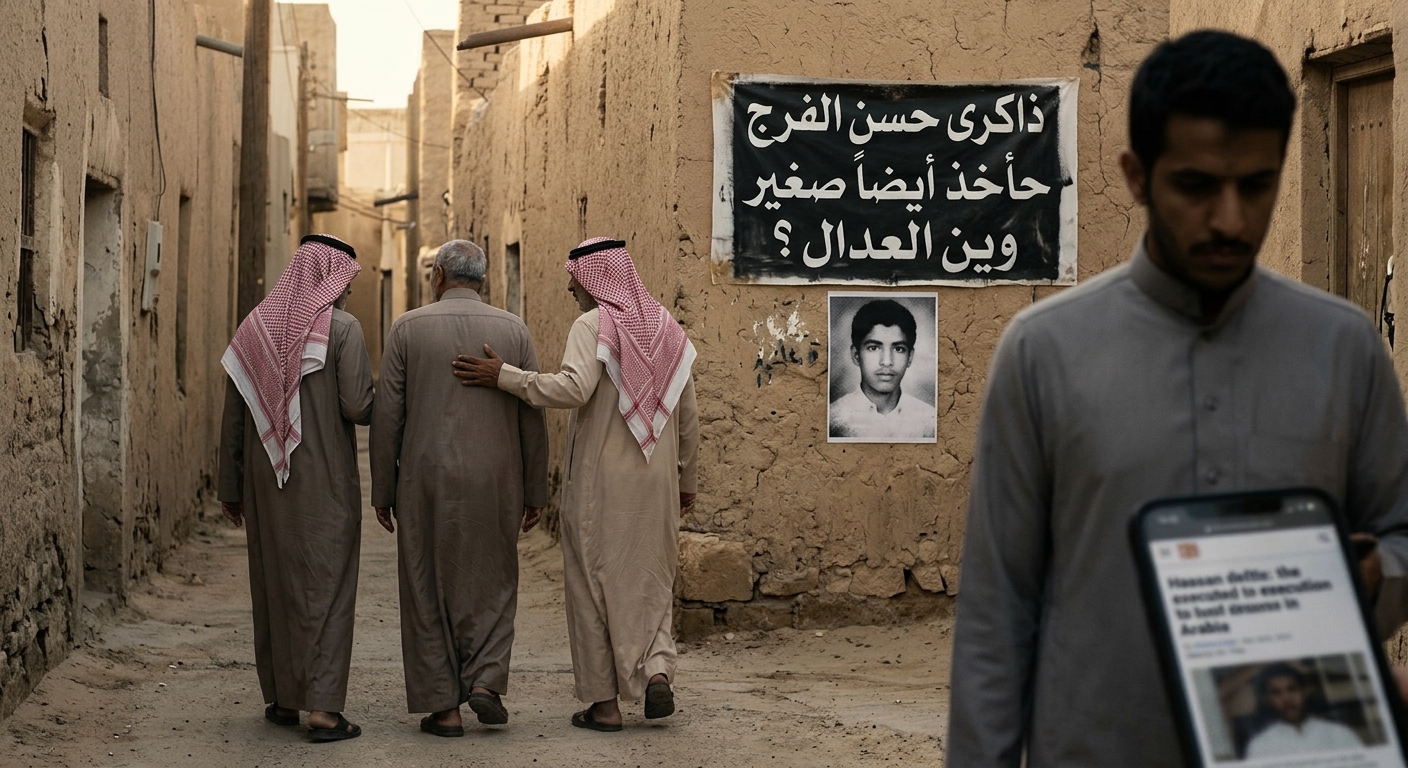
Saudi Arabia executed Hassan Zaki al-Faraj, 29, for crimes allegedly committed when he was 14, despite formally ending the death penalty for minors in 2020. Human rights groups condemn the act as a 'lie' and warn that other youth, like Youssef al-Manasif, face imminent execution under similar circumstances.
Saudi Arabia has executed Hassan Zaki al-Faraj, 29, for alleged crimes committed when he was just 14 years old, specifically for participating in protests concerning the kingdom's treatment of its Shia majority. This execution, carried out without notice on October 17, directly contradicts Saudi Arabia's 2020 formal abolition of the death penalty for crimes committed by minors. Faraj was reportedly subjected to severe torture, solitary confinement, and denied outside communication while in custody. He was executed alongside four other men from the Eastern Province, and human rights organizations like MENA Rights Group and Reprieve warn that more youth 'offenders' remain on death row. Jeed Basyouni of Reprieve stated that Saudi Arabia's claim to have abolished capital punishment for childhood crimes was 'always a lie' and urged the British government to intervene for Youssef al-Manasif, 30, who also faces imminent execution for alleged protest participation at age 15. Manasif was arrested in 2017, charged with numerous crimes including terrorism, and reportedly tortured into signing a false confession, only meeting his lawyer in 2022. Both Manasif and Faraj were sentenced to death in November 2022, after the law change. Saudi Arabia, known for using beheadings, carried out 347 executions in 2023 and 345 in 2024, with many not meeting 'most serious crime' thresholds. Amnesty International reported nearly 100 executions this year. Rights groups highlight a 'horrific pattern' of young men being tortured into false confessions for terror offenses and then executed. International partners, particularly the UK, are urged to intervene, citing past successes where diplomatic intervention reportedly spared three child defendants. Concerns exist that the UK's past reluctance to challenge Saudi Arabia on the death penalty was to protect defense contracts. Joey Shea of Human Rights Watch called Faraj's execution 'unconscionable' due to alleged torture-tainted evidence and unfair trials.