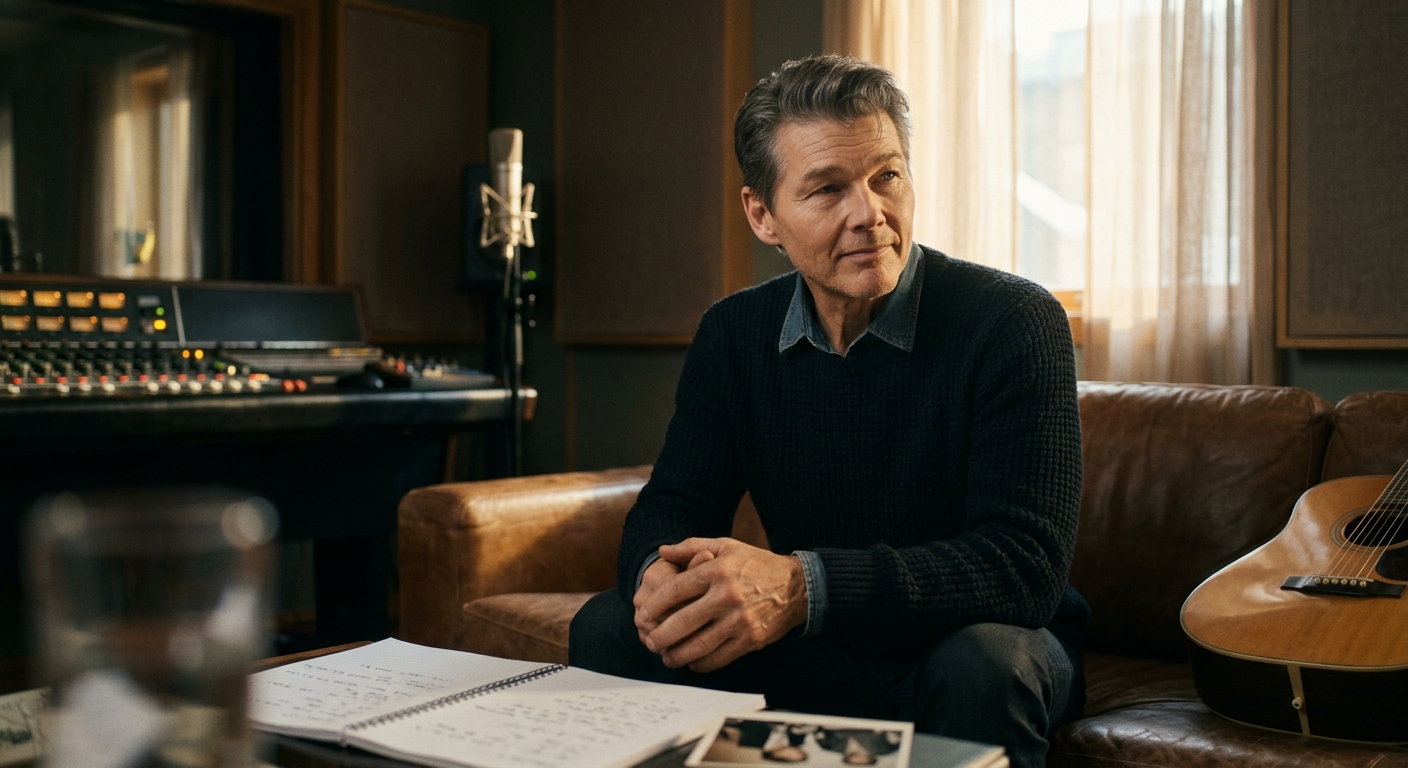
A-ha frontman Morten Harket discusses his Parkinson's diagnosis, revealing it wasn't devastating but a catalyst for a new appreciation of life. He talks about his new album 'Human Grace,' a-ha's challenging early days, the band's dynamics, and his philosophical outlook on fame, faith, and humanity.
Morten Harket describes his new album, 'Human Grace,' as a deeply personal and exploratory process. He reveals that his Parkinson's diagnosis, while impacting his ability to use instruments and sing, wasn't devastating. Instead, it served as a 'blunt and impactful instrument' that forced him to reassemble himself, leading to a profound appreciation for the human organism. For the album, old vocal recordings were utilized due to medication side-effects. Harket recounts a-ha's tough early days in Sydenham, south London, marked by squalid living conditions, gas leaks, and financial struggles, but also an overwhelming sense of excitement and freedom. He never doubted 'Take on Me' would be a hit, despite his bandmates' skepticism, feeling a strong conviction about his role in the group. Reflecting on 'a-ha: The Movie,' he acknowledges both the difficulties of communication and the rewarding moments within the band. Morten dismisses the idea of mentally consulting his bandmates for songwriting, believing they write with his voice in mind. He clarifies a previous joke about supporting Stoke City, attributing it to his brother's fandom. Harket discusses his long-standing curiosity about faith, theology, and philosophical concepts, citing Iain McGilchrist's work on brain hemispheres as a recent fascination. He humorously sidesteps a question about James Bond, stating he's yet to 'even meet myself.' The inclusion of his daughters, Tomine and Karmen, on the new album was unplanned but resulted in precise and excellent performances, despite his initial concerns about their exposure to public attention. Morten believes Gen Z is searching for leadership, human relations, and belonging, lamenting a civilization undoing itself due to negligence. He asserts that his core 'heart' and a kind of naivety have remained unchanged, while fame stands as the biggest, most profound personal loss he has experienced, second only to losing a loved one. He expresses a complex view of humanity, hating fame but loving people's potential.