Discover Seattle's Punk Rock flea market, a resilient and vibrant community hub that repurposes vacant spaces, fosters an alternative economy, and challenges gentrification in one of the world's most expensive cities.
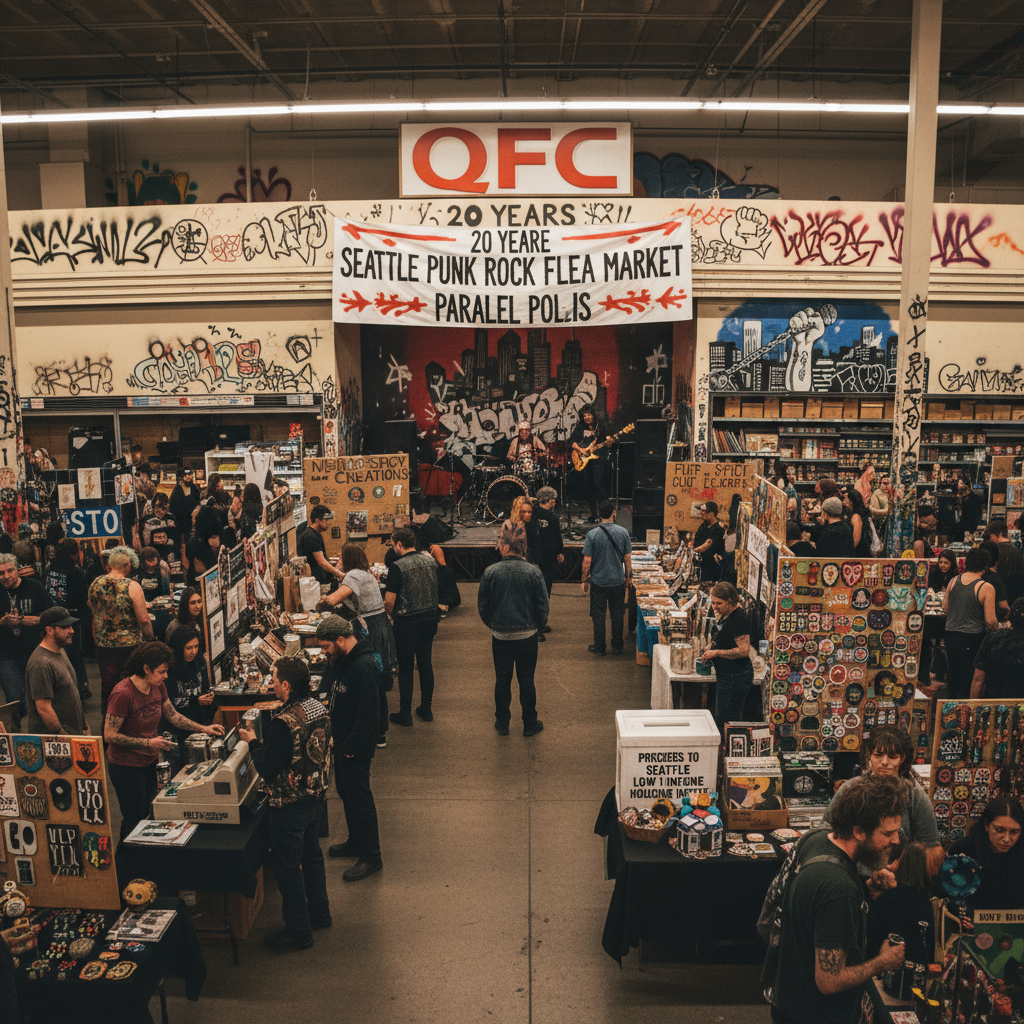
The Punk Rock flea market in Seattle, celebrating its 20th year, has emerged as a powerful 'parallel polis' against the city's rampant gentrification and corporate capitalism. Originating in 2006, this itinerant bazaar, now thriving in a 20,000 sq ft former QFC supermarket on Capitol Hill, provides an accessible and community-focused space for artists, vendors, and 'neuro-spicy' individuals. With a nominal $1 entry fee, it hosts hundreds of vendors selling everything from renegade art to unique vintage items, attracting thousands of shoppers seeking an alternative to mainstream commerce. More than just a marketplace, it embodies a 'punk worldview' that transcends music, emphasizing self-definition and an alternative economic reality where money circulates within the community. Operating as a non-profit, the market donates proceeds to Seattle's Low Income Housing Institute and employs former unhoused individuals, showcasing a profound ethos of community care and mutual aid. Founder Josh Okrent has guided the market through various vacant locations, including a former post office and a strip club, and even through the height of Seattle's homelessness and fentanyl crises during its tenure in an abandoned Bartell Drugs. Its current partnership with real estate firm Hunters Capital on Capitol Hill highlights its ability to inject life and culture into neglected urban spaces, combating chronic vacancies. The market's success has inspired unaffiliated versions globally, and its internal governance emphasizes collective decision-making and compromise. Despite operating on temporary leases, the Punk Rock flea market remains a vital cultural anchor, demonstrating that community and alternative economies can flourish even in one of the world's most expensive cities, proving that 'there's no amount of money that could replace the culture that we've created for ourselves.'