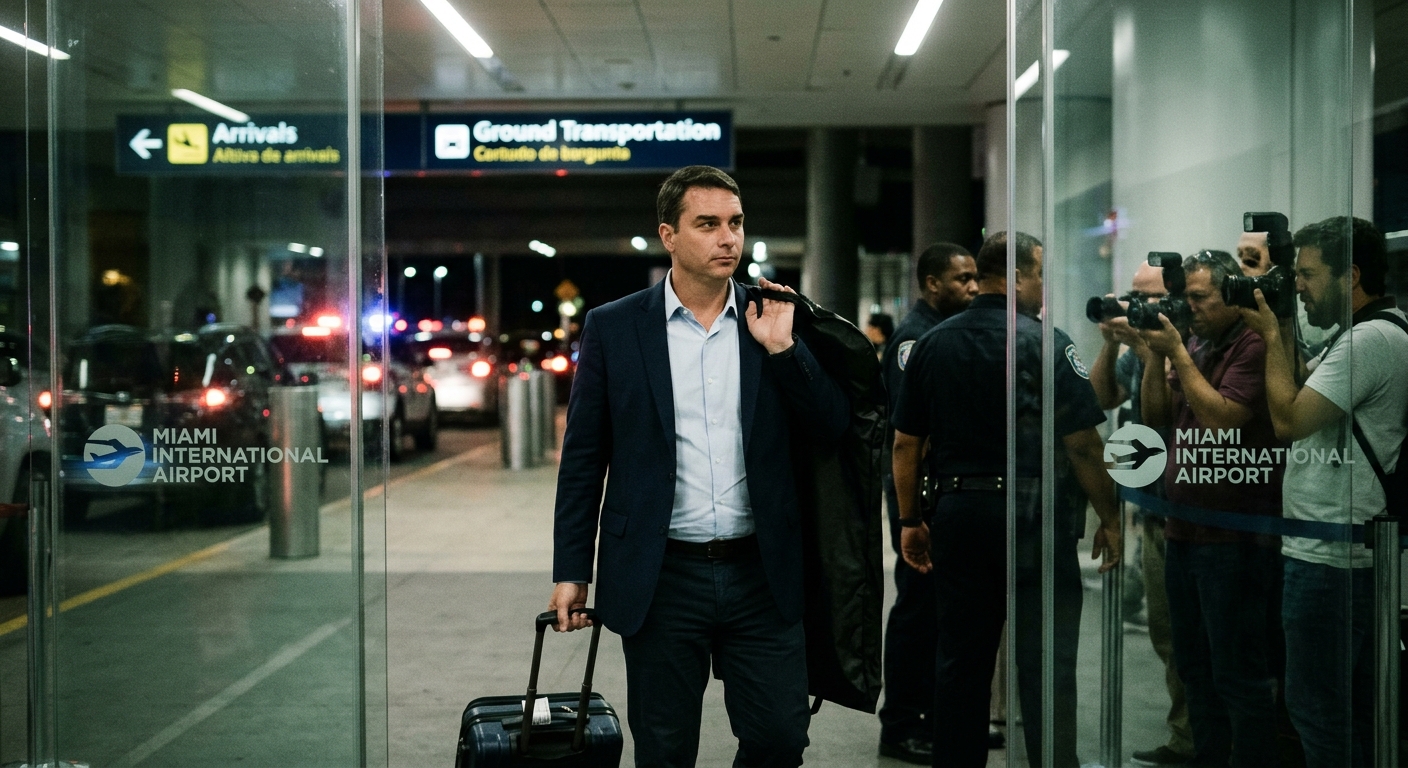
Brazilian Senator Flávio Bolsonaro, son of former President Jair Bolsonaro, has fled to Miami after his father's election defeat, claiming political persecution. His exodus creates a power vacuum on the Brazilian right and complicates US-Brazil relations, as he vows to lead the opposition from abroad.
Following his father, former President Jair Bolsonaro's, resounding political defeat to Luiz Inácio Lula da Silva, Brazilian Senator Flávio Bolsonaro has left Brazil for Miami, US. Flávio, who has refused to concede, citing unsubstantiated electoral fraud, claims he is suffering political and judicial persecution and has styled himself as the 'leader of Brazil' from abroad. This departure sends shockwaves through Brazil’s political right wing, complicating Flávio's pledge to lead the opposition from a distance and potentially weakening his standing due to criticism for fleeing after previously stating he wouldn't. However, despite this, political analysts note that the right-wing movement in Congress retains significant influence, capable of blocking proposals and negotiating with the new government, bolstered by the nearly 60 million votes cast for the Bolsonaro camp in the presidential election. Regionally, Jair Bolsonaro's loss is a setback for the far-right, preventing its control of a major economic powerhouse, though the broader conservative movement across Latin America, which has seen recent gains and aligns with figures like Donald Trump, may not be inherently weakened. Internationally, Flávio's presence in the US could be framed by his supporters as evidence of political persecution. While former US President Donald Trump hinted at a 'rigged' election, he offered Flávio a 'pass' to enter the country and declined to comment on his claims of being the 'rightful president-elect.' Lula's victory solidifies Brazil as a political counterweight to Washington, favoring nonalignment and deepening ties with powers like China and BRICS. Flávio Bolsonaro's continued presence in the US is expected to add a 'new layer of problems' to the already complex US-Brazil bilateral relationship, with potential lobbying efforts, though its long-term decisive impact remains uncertain.