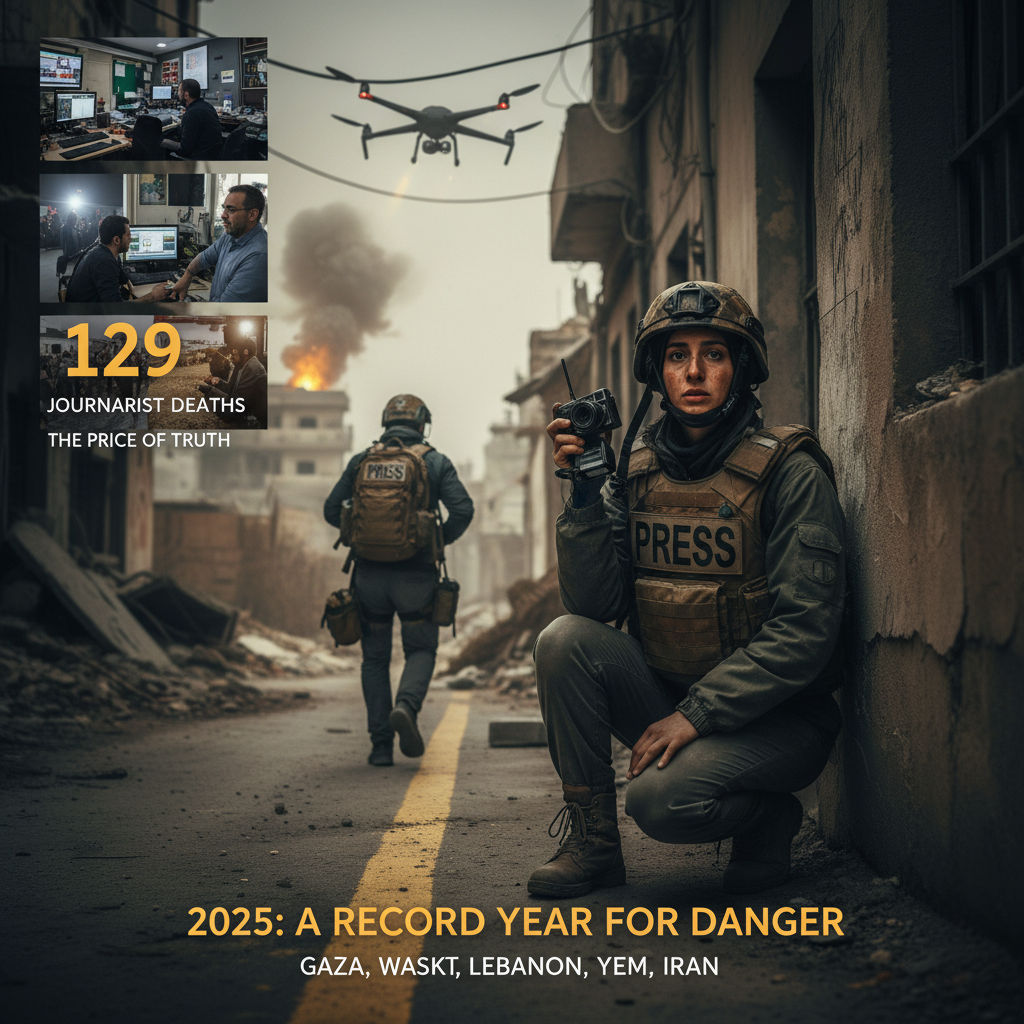
Journalism has become more perilous than ever, with a record 129 journalist deaths reported in 2025, predominantly in conflict zones like Gaza where reporters are actively targeted. The article details the extreme risks and extensive precautions taken by Guardian journalists worldwide, from war zones to politically hostile environments, underscoring the vital, yet costly, role of independent reporting in defending democracy.
In 2025, journalism reached an unprecedented level of danger, with the Committee to Protect Journalists (CPJ) recording a record 129 deaths of media workers, surpassing the previous year's record. Journalists are now actively targeted, a significant shift from past conflicts. The majority of these deaths occurred in Gaza, the West Bank, southern Lebanon, Yemen, and Iran, with Israeli forces reportedly responsible for two-thirds of journalist killings globally. The article provides harrowing accounts, such as the evacuation of Guardian correspondent Malak Tantesh from Gaza and the daily risks faced by her cousin Seham Tantesh, who now reports from the region. Seham meticulously plans routes, avoids solo travel, and ensures relatives know her movements, navigating unmarked "yellow lines" where Israeli troops frequently open fire. The West Bank also presents dangers with rising settler violence and security forces targeting journalists. In Lebanon, Guardian correspondent William Christou has lost peers and been shot at, relying on UNIFIL and his US passport for some protection. Guardian journalists employ extensive safety protocols, including body armor, helmets, medical kits, risk assessments, and constant communication with editors. The article highlights the costly nature of these precautions but stresses that ceasing reporting in dangerous areas would betray those whose stories need telling and readers seeking the truth. Beyond conflict zones, even in the US, the climate for journalism has grown hostile, evidenced by a recent shooting incident at a White House Correspondents' Association dinner and political targeting of reporters. In Ukraine, Guardian journalists face drone threats on the 750-mile frontline, using detectors and taking cover within seconds. Despite the inherent dangers and costs, the article concludes by emphasizing that independent journalism is crucial for democracy and free speech, serving as a "citizen’s sword and shield against authoritarianism," and appeals for reader support to continue this vital work.