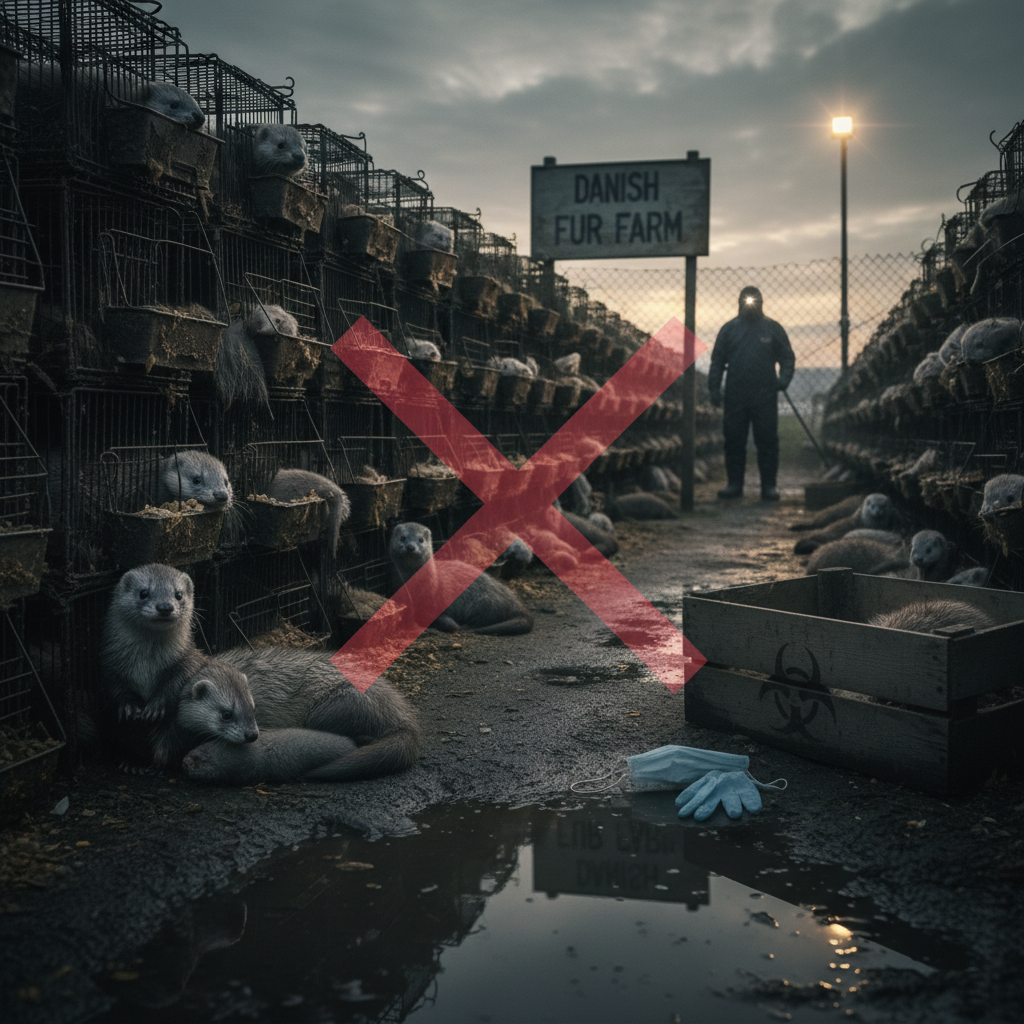
Fur farming, a cruel and economically unsustainable industry, poses a grave public health risk by incubating potential pandemics, as seen with mink-related coronavirus strains in Denmark. Despite declining demand and ethical concerns, the industry often relies on taxpayer subsidies, highlighting an urgent need for global bans to prevent future health crises and end animal cruelty.
Fur farms, though a shrinking industry, are described as inhumane 'hells' where thousands of animals are confined in tiny, unsanitary cages, leading to severe stress, self-mutilation, and even infanticide. Beyond the ethical concerns, these facilities, particularly mink farms, act as 'viral sponges' where pathogens can rapidly spread, mutate, and jump back to humans, posing a significant pandemic threat. This risk materialized in 2020 when mink farms in Denmark led to hundreds of human infections with mutated coronavirus strains, prompting the mass slaughter of 17 million mink and effectively shutting down the national industry. The article argues that allowing this 'dangerous genetic experiment' to continue is unacceptable, especially as the industry is no longer self-sustaining and relies on government subsidies in both the EU and potentially the US. There's strong public and political support in the EU for a continent-wide ban, with 18 member states already restricting the practice, though the European Commission has delayed a decision. The US also faces calls for a federal Mink Virus Act to phase out farming and state-level bans on fur sales. The author emphasizes that banning fur farming is a critical public health measure, comparable to ending other historically cruel practices, and that the costs of this luxury industry are ultimately borne by society in the form of potential pandemics.