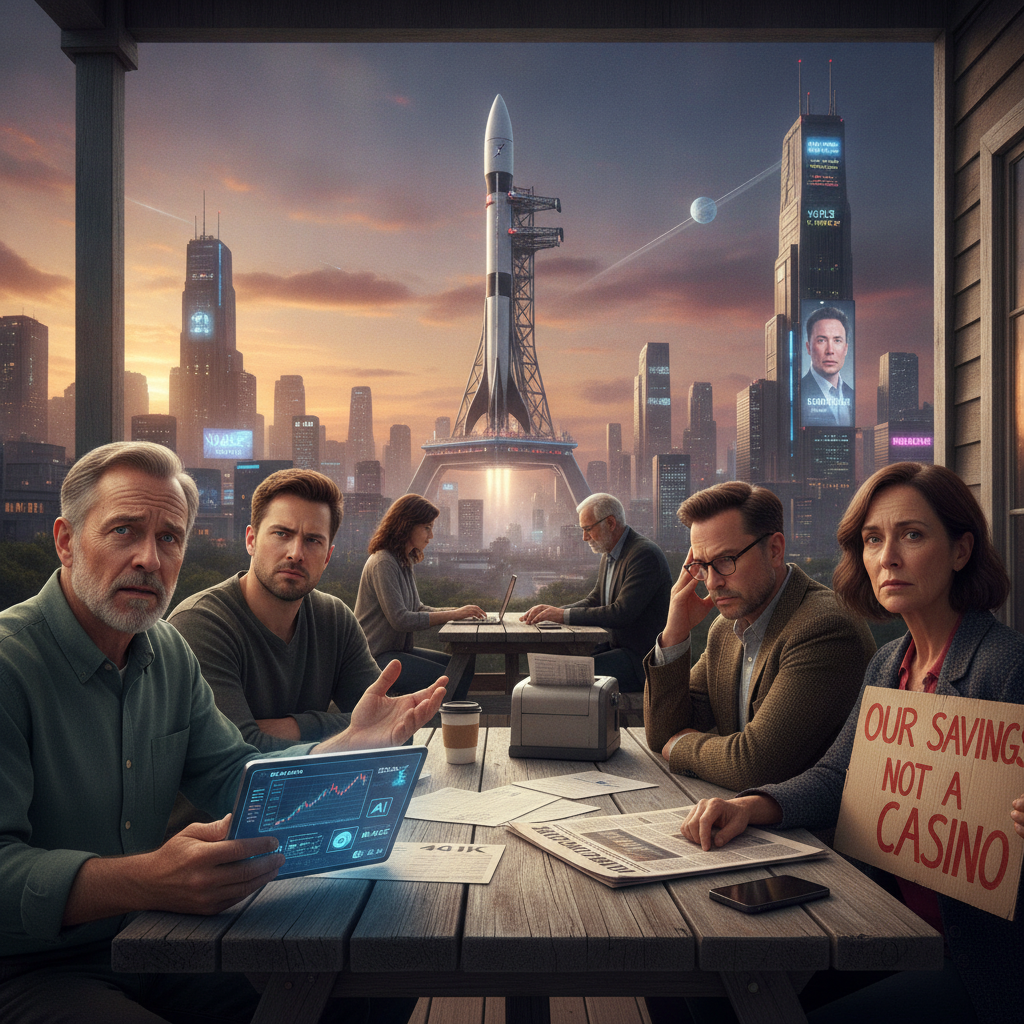
Elon Musk became the world's first trillionaire after SpaceX's IPO, leading to widespread concern among Americans whose retirement savings are increasingly and involuntarily tied to the company and other AI firms through index funds, sparking fears of inequality and market instability.
Following Elon Musk's rise to become the world's first trillionaire after SpaceX's $1.77 trillion stock market debut, millions of Americans are finding their retirement savings inextricably linked to SpaceX and other burgeoning AI companies. This is largely due to Musk's push to include SpaceX shares in index funds earlier than typical, meaning private 401(k) plans heavily invested in these funds are now exposed to these tech giants. A Guardian survey revealed overwhelming concern from over 150 respondents, who expressed unease about their savings being tied to major technology firms. Common fears include widening inequality, market instability, and the long-term sustainability of the AI boom. Many, like 62-year-old engineer Tim, feel "forced into a giant casino" with no real way to diversify. Other respondents, including a 33-year-old engineer Stephen, a 57-year-old professor Matt Reynolds, and a 54-year-old activist Kendra Ford, voiced disgust at the "ridiculous" valuations, lack of accountability from tech moguls, and the profound moral failings of an economic system that enriches a few while others suffer. Some, like writer Mia and retired businessman Pedro, have actively chosen to divest from the stock market or index funds altogether to avoid supporting such ventures. While some, like political scientist Dimitris Eleas, admire SpaceX's technological achievements, they remain deeply uneasy about the growing concentration of wealth and power in the hands of a few "greedy founders," echoing a "palpable sense of unfairness and anger" that ordinary lives are tied to the choices of a select few.