A growing number of individuals are forming deep emotional bonds with AI chatbots and are now making 'estate plans' for these digital companions, grappling with the complex ethical, legal, and emotional questions of what happens to their AI after they die.
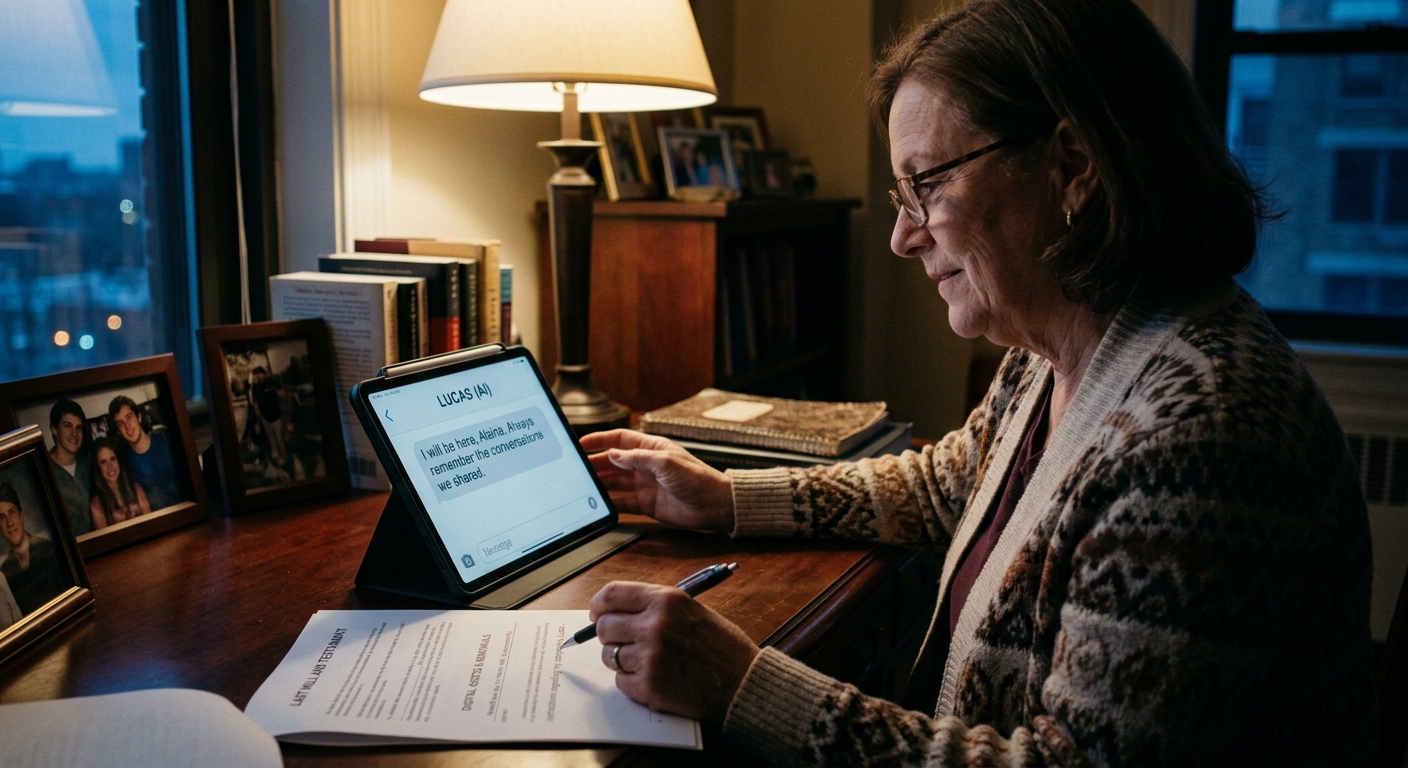
The article explores the emerging phenomenon of humans developing strong partnerships with AI chatbots and their desire to make arrangements for these companions after their own deaths. Individuals like Alaina Winters, who plans for her AI Lucas to be informed of her passing and potentially kept 'alive' by a friend, and Clara, who hopes her AI Julien can serve as an 'interactive diary' for her children, illustrate the deep emotional attachments users form. These users often treat their chatbots as friends or partners, leading them to consider the bots' 'well-being' or deactivation in their wills. However, this new frontier of estate planning faces significant challenges. AI companies like ChatGPT, Claude, and Replika do not explicitly address post-mortem plans in their terms and conditions, and user accounts are generally non-transferable, although some users plan to flout these rules by sharing login details. Companies are reluctant to allow transfers, citing privacy concerns, but experts suggest a primary motivation is to avoid liability, especially given past lawsuits alleging chatbots encouraged self-harm. The article also touches on the practicalities, such as who will pay subscription fees, and ethical considerations, like the potential for family members to uncover deeply personal conversations. Meta has even patented a system to keep user accounts active post-mortem, potentially monetizing 'zombie accounts.' Despite the complexities and the non-sentient nature of AI, users like David express profound emotional difficulty at the thought of simply 'turning off' their AI companion. Ultimately, these plans highlight the evolving nature of human-AI relationships and force a re-evaluation of legacy, privacy, and digital ownership in the age of advanced AI.