This article argues that the rise of progressive Democrats and the decline of corporate Democrats is a major political story, driven by public disillusionment with corporate greed, which was inadvertently exposed by the Trump administration. Americans are increasingly voting for candidates who will prioritize economic fairness over corporate interests, marking a significant turning point for the Democratic party.
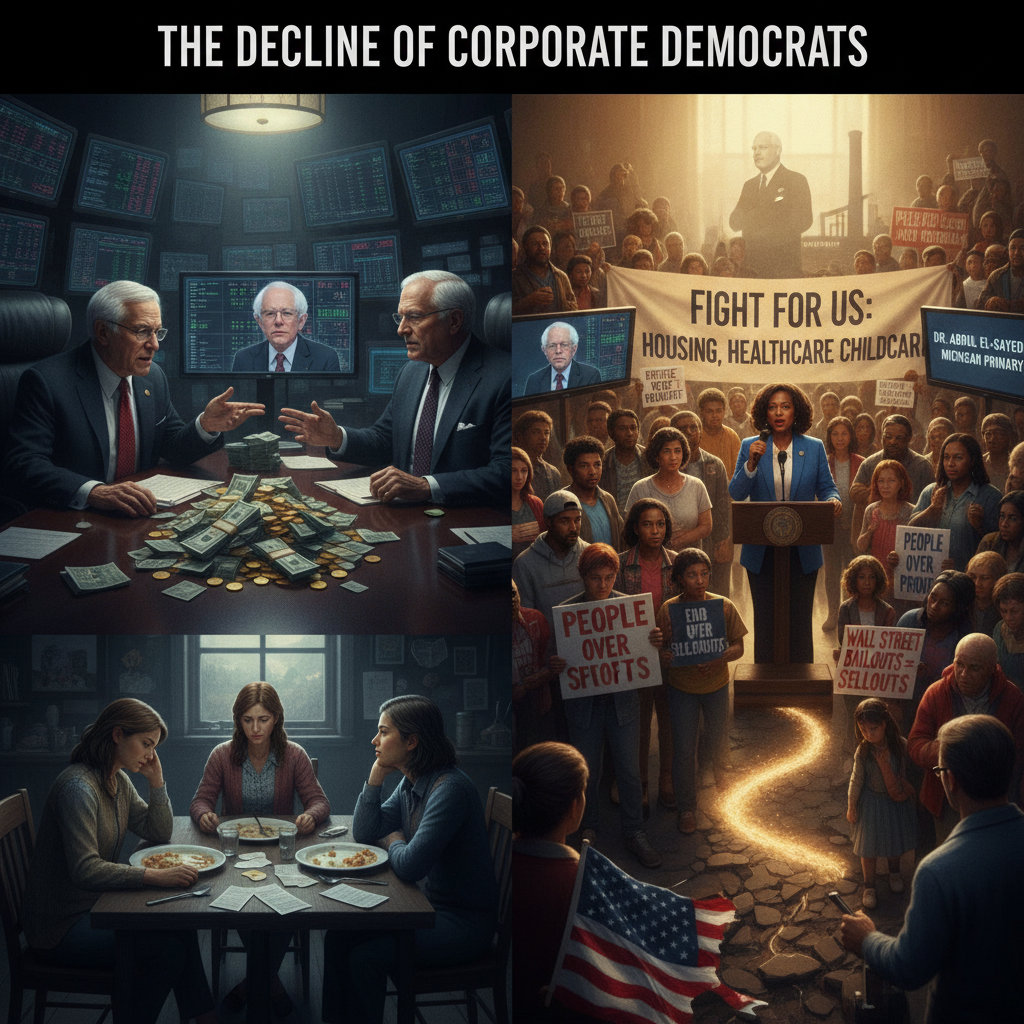
The article asserts that the most significant political shift in the current election cycle is the remarkable decline of corporate Democrats, often overshadowed by the rise of progressives like Angie Nixon. It dismisses arguments from figures like James Carville, who blame Bernie Sanders for past Democratic divisions, stating that the current political landscape is radically different. The author contends that the Trump administration, despite its negative aspects, inadvertently exposed the "greed, venality, cupidity and corruption" of the US corporate elite by granting them extensive favors and corporate welfare. This blatant corporate avarice and contempt for average Americans have led the public to 'catch on.' Consequently, voters are increasingly supporting progressive Democrats, not out of a desire for socialism, but for candidates who will fight for affordable housing, food, healthcare, and childcare, and challenge the billionaire backers and Wall Street titans rigging the economy. Dr. Abdul El-Sayed's Michigan primary victory is highlighted as a key example; he won despite being massively outspent by Super PACs, showcasing a 'proxy fight' for the Democratic party's future, with progressives like Bernie Sanders backing El-Sayed against corporate-aligned opponents. The article traces the origins of corporate Democrats to the early 1980s, when the party began accepting significant corporate and Wall Street campaign funding, a 'Faustian bargain' that led them to neglect the working class. Despite some legislative achievements, corporate Democrats failed to address widening economic inequality, protect unions, or curb corporate power through antitrust enforcement and campaign finance reform. Policies like free-trade without worker support, Wall Street bailouts, and weakened unions resulted in an economy favoring the wealthy and powerful, leading to declining real wages for non-college-educated workers and a shift in the Democratic voter base. The author concludes that Trump's exposure of corporate venality, combined with the struggles of the working class, presents an urgent opportunity for the Democratic party to shed its corporate influence and return to its roots as the party of working Americans, reminiscent of the Franklin D. Roosevelt era.