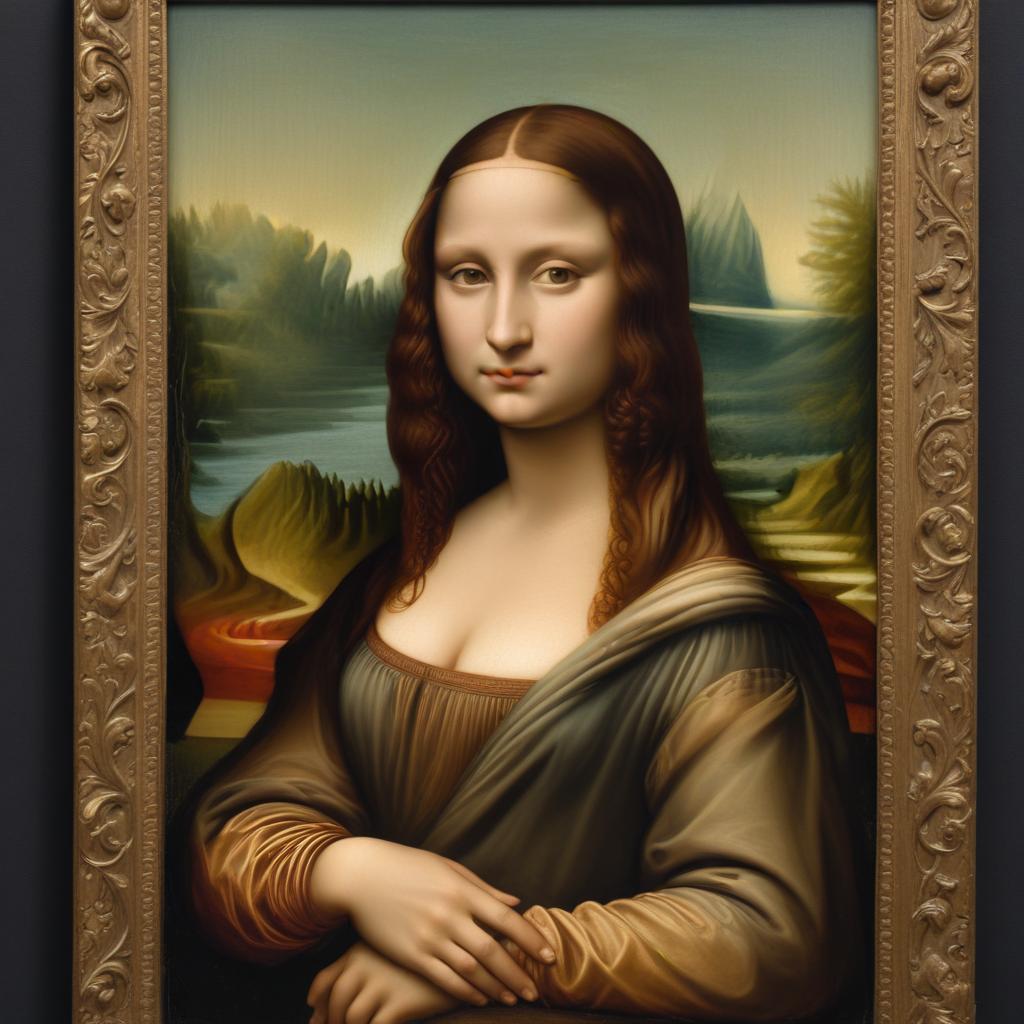
An art historian unveils compelling evidence suggesting Leonardo da Vinci created a scandalous nude version of the Mona Lisa, a provocative work that influenced Renaissance artists and challenges our understanding of the iconic masterpiece.
The article explores the intriguing theory that Leonardo da Vinci created a nude version of his iconic Mona Lisa. It begins by highlighting the enduring allure of the clothed Mona Lisa at the Louvre and then introduces historical evidence of a nude 'Joconda.' An 18th-century engraving, based on a painting once owned by Britain's first Prime Minister, Sir Robert Walpole, depicted a half-naked woman with the Mona Lisa's enigmatic smile and characteristic hand position. Though this painting, now in the Hermitage, is no longer attributed to Leonardo, the author investigates whether Leonardo himself painted such a provocative work. The investigation points to several clues: Leonardo's cryptic mention of a 'Florentine woman portrayed from life at the request of the late Magnificent Giuliano de’ Medici' in 1517, which the author suggests refers to a nude version rather than the known portrait of Lisa del Giocondo. Crucially, a full-scale preparatory drawing, or 'cartoon,' from 1514-16 at Chantilly, depicts a nude model with 'unmistakable allusions' to the Mona Lisa, including identical hand positioning, and has been partially attributed to Leonardo. Further evidence is found in Raphael's 'La Fornarina' (c. 1520), a 'half-naked' portrait that shares striking similarities with the Mona Lisa, leading the author to believe Raphael was influenced by a nude Mona Lisa he likely saw in Leonardo's studio in Rome. The article argues that this 'nude Mona Lisa' was a 'grenade chucked into the high Renaissance,' instantly radicalizing how artists painted bodies and influencing major figures like Raphael, Giulio Romano, Titian, and Correggio. Considering Leonardo's known creation of other erotic works like 'Leda and the Swan,' the author hypothesizes that the nude Mona Lisa was painted for Giuliano de’ Medici as a memento of a mistress he had to abandon before his marriage in 1515. The article concludes that this discovery not only sheds new light on the world's most famous painting but also demonstrates Leonardo's confidence in the Mona Lisa's immediate and unequalled 'iconic' status, allowing him to playfully 'travesty it with a naked version.'