In 2026, widespread anxiety over AI's impact on job security and worker dehumanization is unexpectedly dissolving traditional class divisions and catalyzing a resurgence in worker power, creating a pivotal opportunity for labor movements to redefine the future of work.
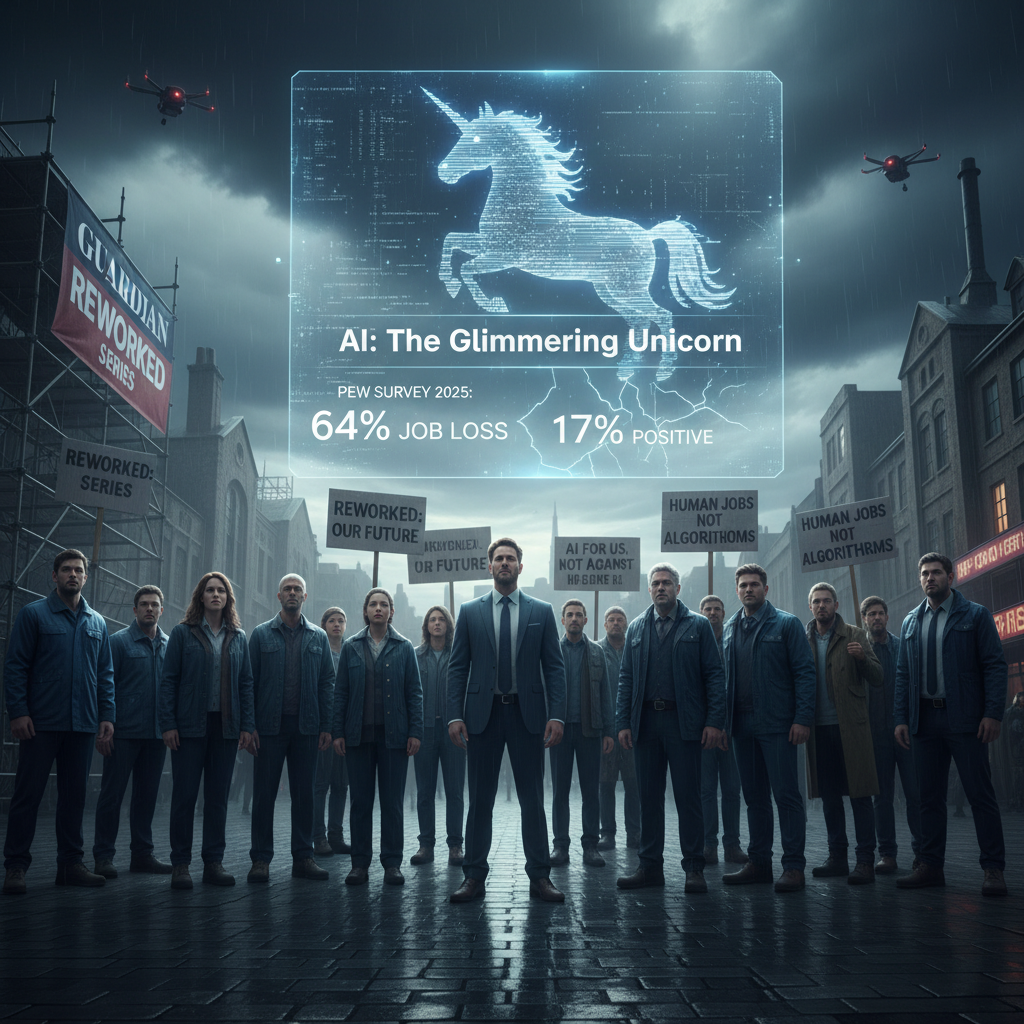
The year 2026 is marked by profound anxieties for workers, with the looming threat of artificial intelligence, a deepening affordability crisis, and global instability overshadowing past worker empowerment movements. While tech CEOs champion AI as a 'glimmering unicorn,' the public's sentiment is largely negative; a 2025 Pew survey indicated 64% believe AI will reduce jobs, with only 17% foreseeing a positive societal impact. This uncertainty prompts The Guardian's 'Reworked' series, focusing on AI's real-world implications for workers. A notable shift is the erosion of blue-collar and white-collar distinctions, as both groups increasingly fear algorithmic surveillance, dehumanization, or job displacement. Experts argue this shared anxiety is a critical moment, catalyzing workers across all sectors to unite and push back. This collective response, reminiscent of post-COVID power shifts, offers a unique opportunity for labor movements to regain lost ground and advocate for a future where technology fosters shared prosperity rather than merely serving as a tool for surveillance and control. The article emphasizes that the direction of AI is not predetermined but a choice, urging a skeptical view of tech billionaires' narratives and highlighting the potential for collective action to shape a more equitable technological future.