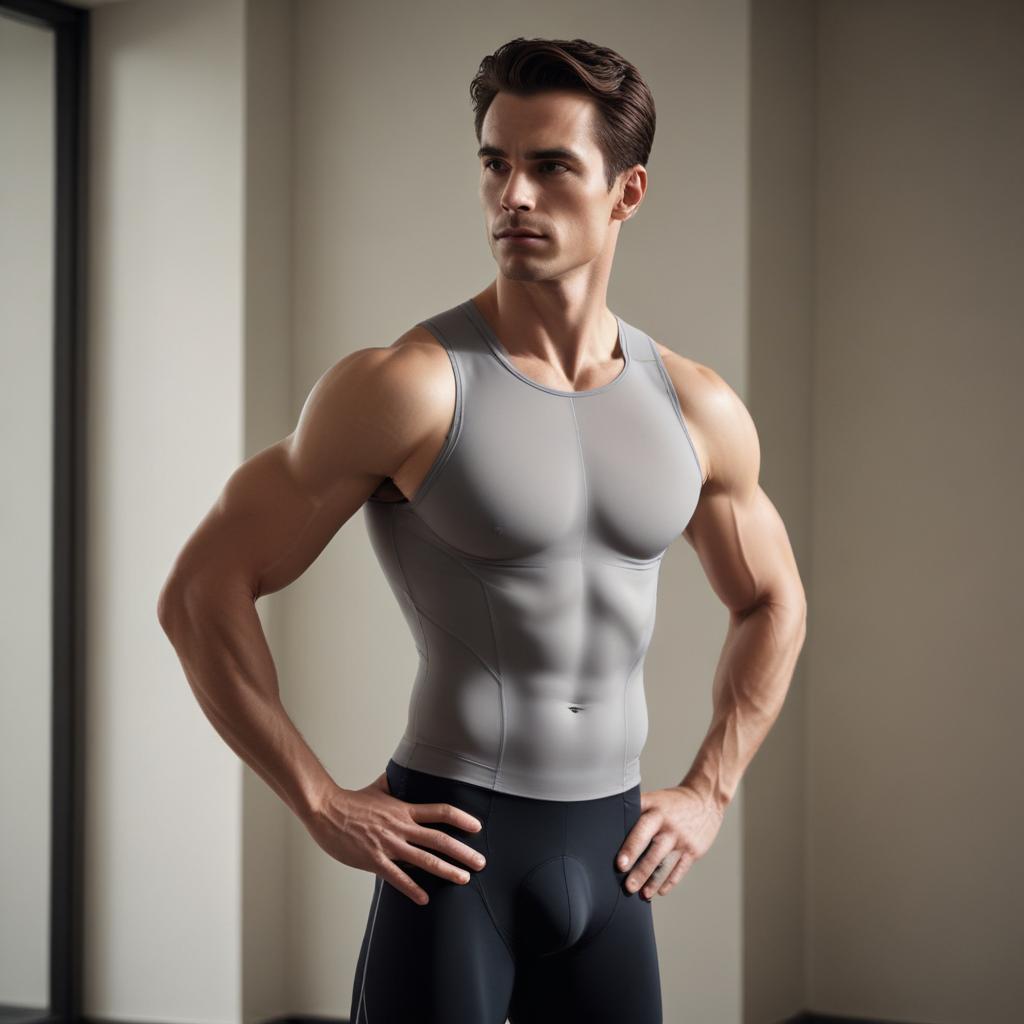
The author recounts his often-uncomfortable experience trying men's compression wear and shapewear, exploring the historical context, market challenges, and the surprising reasons why this segment, despite its potential, hasn't fully taken off with major brands.
The article details the author's personal, often challenging, experience with men's compression wear and traditional shapewear, highlighting the initial struggle to put on the tight garments and the subsequent discomfort, including shortness of breath. It delves into the ambiguous distinction between 'compression wear' (marketed for athletic performance but often used for slimming) and 'shapewear,' noting that both rely heavily on elastane. The piece examines the repeated attempts by major brands like Marks & Spencer, Spanx, and Skims to launch men's shapewear lines, often with limited success, withdrawals, or a pivot to non-shaping apparel. Despite these struggles, smaller niche brands like Esteem Apparel and TAILONG are building significant online businesses, with searches for 'male shapewear' increasing. The market for men's shapewear remains a small fraction of the overall shapewear industry, though some retailers like The London Corset Company report a growing demand. Historically, men have used 'corrective devices' since the 18th century to conform to socially desirable body shapes, from steel backs to hidden collars. The article concludes by exploring potential reasons for the slow adoption of men's shapewear by bigger players and consumers, including discomfort, the desire for secrecy among wearers, and a lack of clear market understanding from major brands, despite its practical applications for post-surgical recovery, supporting excess skin, minimizing gynaecomastia, or simply looking slimmer for an event.