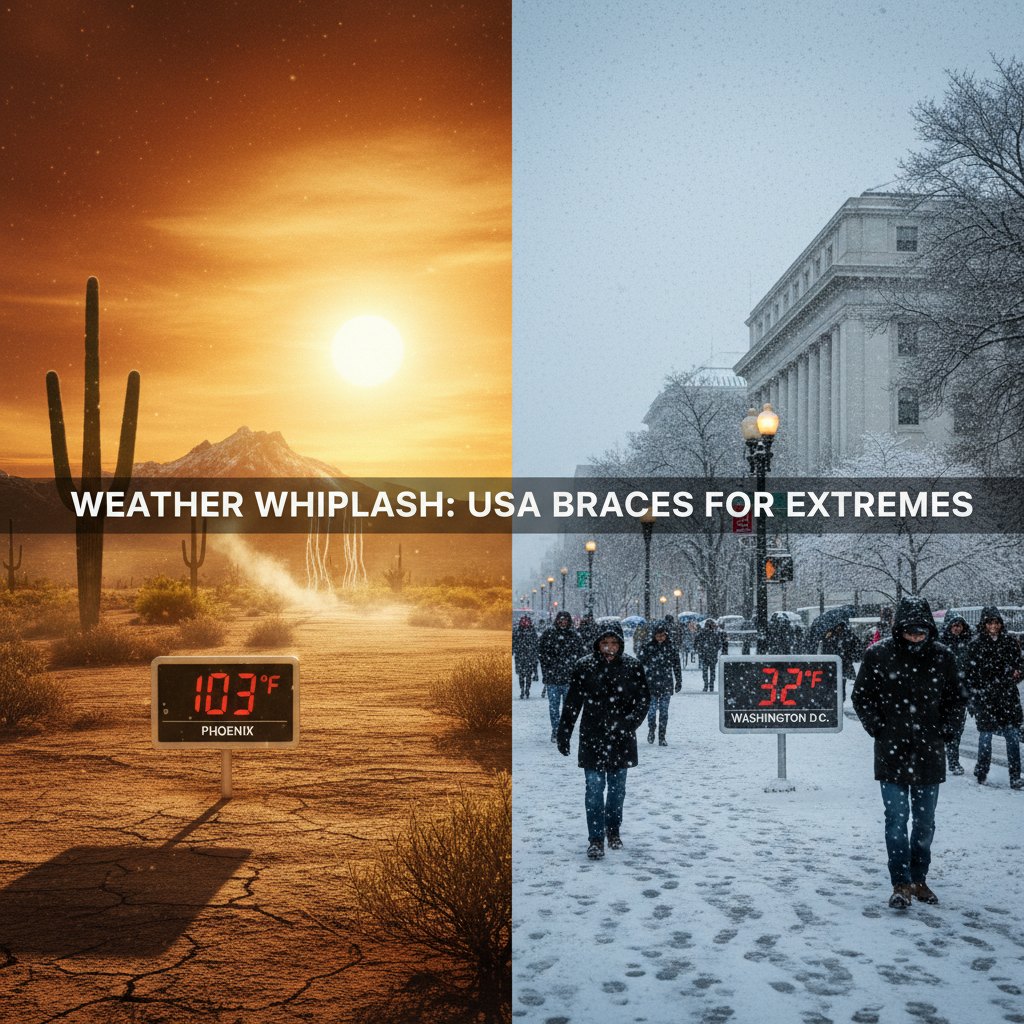
A drastic weather pattern change will bring a record-setting, potentially deadly heat wave to the West, melting snowpack and raising wildfire concerns, while winter-like cold returns to the East with significant temperature drops and chances for snow.
The United States is bracing for an acute case of 'weather whiplash' as a drastic pattern change unfolds. The West will experience a record-setting heat wave for at least two weeks, starting Thursday, with numerous locations likely to set all-time heat records for March. This unprecedented heat will melt the West's already well-below-average snowpack, leading to concerns for spring and summer water resources and a potentially severe wildfire season, with Colorado and Utah possibly seeing their lowest snowpack on record. This heat, driven by a strong, stationary 'heat dome,' follows the West's hottest meteorological winter on record and is exacerbated by climate change. The National Weather Service warns of unprecedented and potentially deadly March temperatures in the Southwest, with Phoenix likely to see its earliest 100-degree day. Meanwhile, downstream of the heat dome, the jet stream will dive south out of Canada, ushering winter-like cold into the Midwest and East, complete with chances for snowfall into mid-to-late March. Cities that saw highs in the 70s and 80s this week, like Washington D.C. (84 degrees Tuesday), will see temperatures plummet into the 30s and 40s next week, with the cooldown reaching as far as Florida. While the Eastern cold snap will feel like major whiplash, the weather shift and its long-term implications in the West are considered far more significant.