President Trump has pledged a $5,000 'dividend' to every American adult if Republicans win both chambers of Congress in the midterms. This ambitious promise, estimated to cost $1.3 trillion, faces significant questions regarding its legality, potential inflationary impact, and the practicalities of its implementation, including whether it constitutes an election bribe or a protected campaign promise.
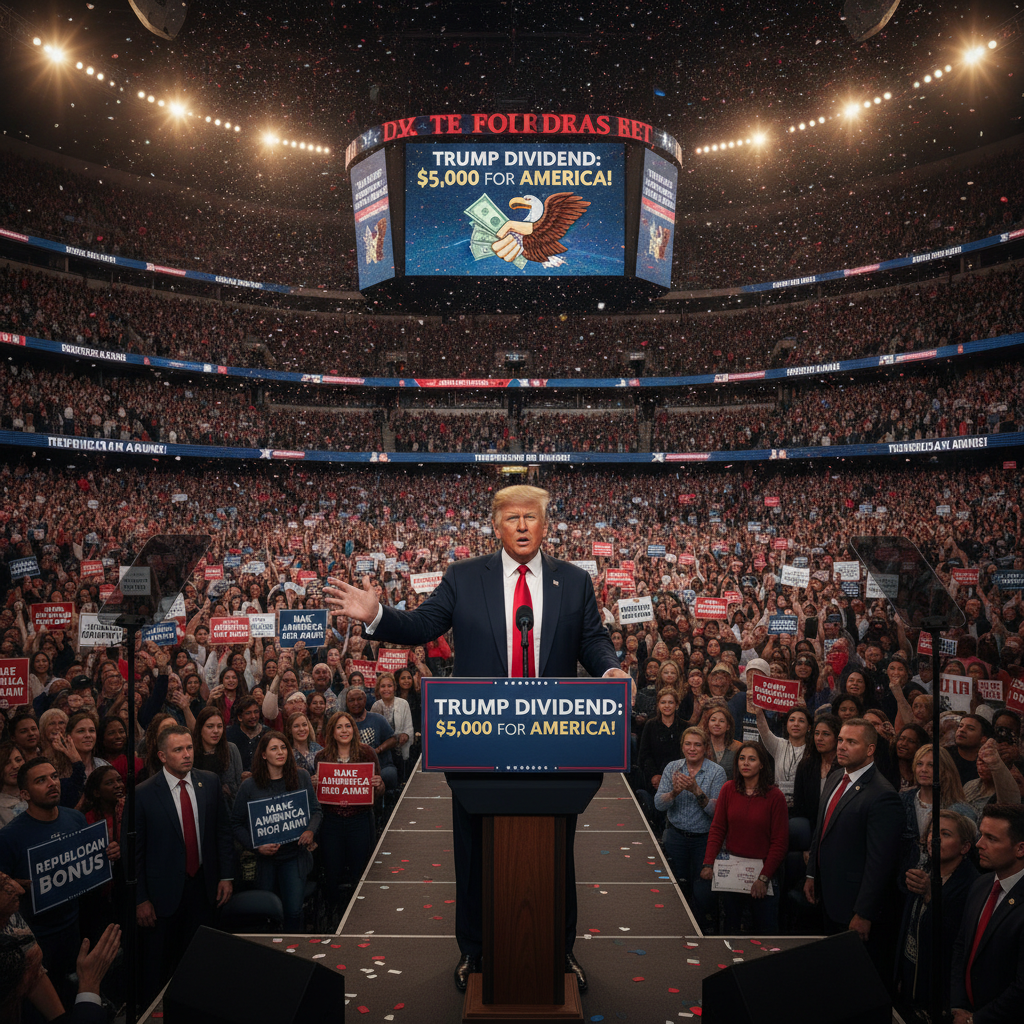
President Donald Trump announced a pledge to issue a $5,000 'dividend' to every adult American citizen if the Republican Party secures majorities in both the House and Senate during the upcoming November midterms. Made at a rally in Dallas, this 'Trump Dividend' was presented as a benefit of Republican economic success, with the condition that the money must be spent within the United States. However, Trump provided scant details on how this spending rule would be enforced or, crucially, how the estimated $1.3 trillion needed for this payout (based on 258.3 million adults) would be funded. He also framed the offer with a stark warning: 'If we lose, you’re going to lose your border, you’re going to lose your tax cuts, you’re going to lose your safety and security, you’re going to lose your wealth.' The proposal has immediately sparked controversy and skepticism. Economically, such a massive stimulus could exacerbate inflation and worsen the nation's finances, at a time of growing anxiety in bond markets over government spending. Legally, experts question if the promise constitutes an illegal attempt to influence votes, akin to bribery, although it could also be argued as a protected election promise under the First Amendment. This debate echoes past allegations against figures like Elon Musk regarding vote-buying. While the idea was reportedly well-received in Dallas, Trump has a mixed record on delivering promised payouts, having issued Covid-19 stimulus checks but failing to deliver on other cash pledges related to bureaucracy cuts or tariffs. He did, however, pay out 'Warrior Dividend' checks to military members, which he cited as proof of his ability to deliver.