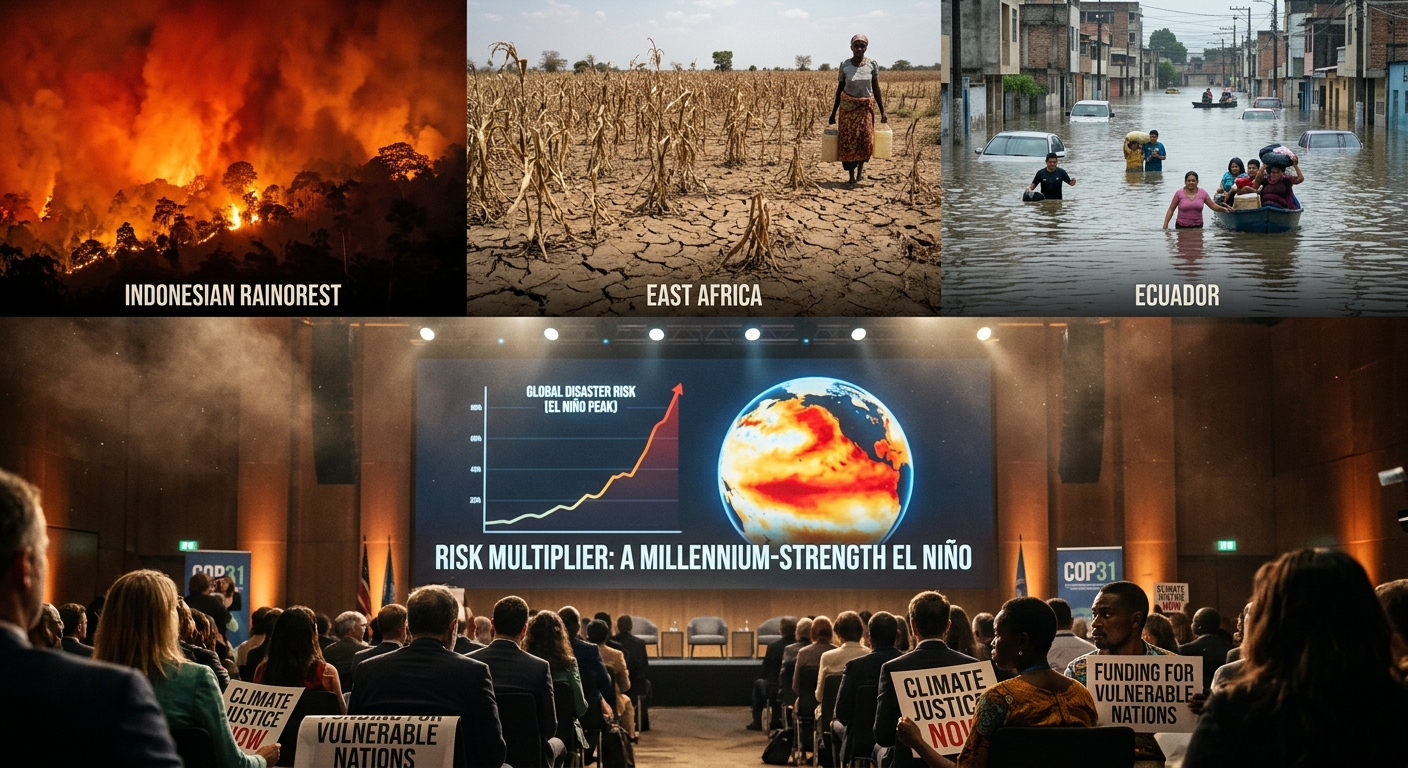
A 'super El Niño,' the strongest in a millennium, is intensifying global climate disasters like droughts, floods, and wildfires, acting as a 'risk multiplier.' This phenomenon is adding critical urgency to COP31 talks, highlighting the severe shortfall in climate finance from wealthy nations to vulnerable countries already struggling with compounding crises.
The article details how a 'jaw-dropping' super El Niño, potentially the strongest in 1,000 years, is significantly exacerbating the climate crisis and global disasters. This naturally recurring phenomenon, characterized by the heating of the eastern Pacific, is acting as a 'risk multiplier,' fueling events like wildfires and crop failures in Indonesia, coastal inundation in the US, severe drought in Sudan and the Marshall Islands, and severe flooding in Ecuador and Somalia. The Marshall Islands, for instance, faces a compounding crisis of drought on top of rising sea levels. This escalating situation is adding immense pressure to the COP31 summit, particularly concerning climate funding for vulnerable nations. Despite an agreement last year to triple adaptation finance, wealthy countries are delivering only a fraction of the $305 billion annually needed by 2035, leaving poorer nations with unaffordable bills. The El Niño is expected to peak in December and reverberate through next year, almost certainly making it the hottest on record. This will lead to a cascade of crises including heatwaves, crop shortages, extreme rain or drought, and coral bleaching. UN officials are especially concerned about East Africa, where the exacerbated drought is predicted to cause up to 3 million displacements across Kenya, Somalia, South Sudan, and Uganda, with significant crop losses like a 40% drop in Kenya's maize production. Campaigners at COP31 emphasize the urgent need for immediate resources on the ground rather than diplomatic promises, as people living with the climate crisis cannot afford to wait.