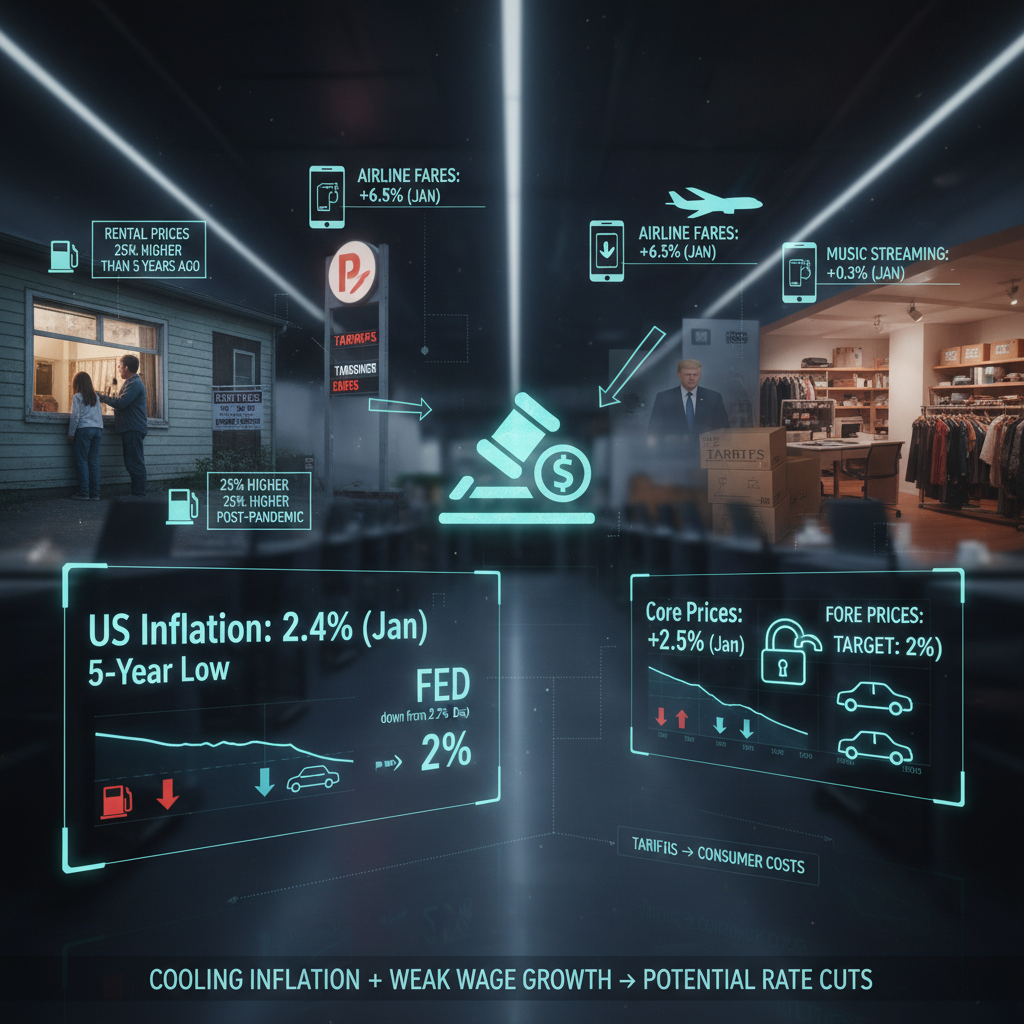
U.S. inflation dropped to a nearly five-year low of 2.4% in January, nearing the Federal Reserve's 2% target. This relief comes from slowed apartment rental growth, falling gas prices, and a sharp decline in used car costs. While consumer prices are still significantly higher than five years ago, this cooling trend suggests potential Fed interest rate cuts, despite some lingering price increases attributed to tariffs.
A key measure of U.S. inflation fell to 2.4% in January, marking a nearly five-year low and drawing closer to the Federal Reserve’s 2% target. This figure is down from 2.7% in December, offering some relief to Americans. Core prices, excluding volatile food and energy categories, also saw their smallest increase since March 2021, rising just 2.5% in January from a year ago. This deceleration is largely attributed to a slowdown in apartment rental price growth and declines in gas and used car prices. Despite this positive trend, consumer prices remain about 25% higher than five years ago, with the cost of food, gas, and apartment rents having soared post-pandemic, keeping 'affordability' a prominent political issue. On a monthly basis, consumer prices rose 0.2% in January, with core prices up 0.3%, partly offset by a significant 1.8% drop in used car prices. The cooling inflation suggests that the Federal Reserve might be able to implement more interest rate cuts this year, a move that could alleviate high borrowing costs for mortgages and auto loans. However, some prices continue to rise. Furniture prices jumped 0.7% in January (up 4% annually), appliances rose 1.3%, and clothing increased 0.3% (up 1.7% annually). Services also saw increases, with airline fares soaring 6.5% in January and music streaming subscriptions up 4.5% monthly. These increases are partly linked to President Donald Trump’s tariffs, which companies are passing on to consumers. Studies indicate that U.S. companies and consumers bear nearly 90% of tariff costs. For instance, Naturepedic, an organic mattress maker, raised prices by about 7% last year due to duties on imported organic latex. However, some tariffs have been delayed or reduced, offering partial relief to certain industries. Economists note that while tariffs increase some costs, they haven't led to broad-based price increases across the economy. This is partly because weaker consumer spending and slower wage growth mean consumers are less able to absorb widespread price hikes. Overall, the recent inflation figures, coupled with declining wage growth and weak hiring, signal a shifting economic landscape that could lead to lower borrowing costs if the Federal Reserve acts.