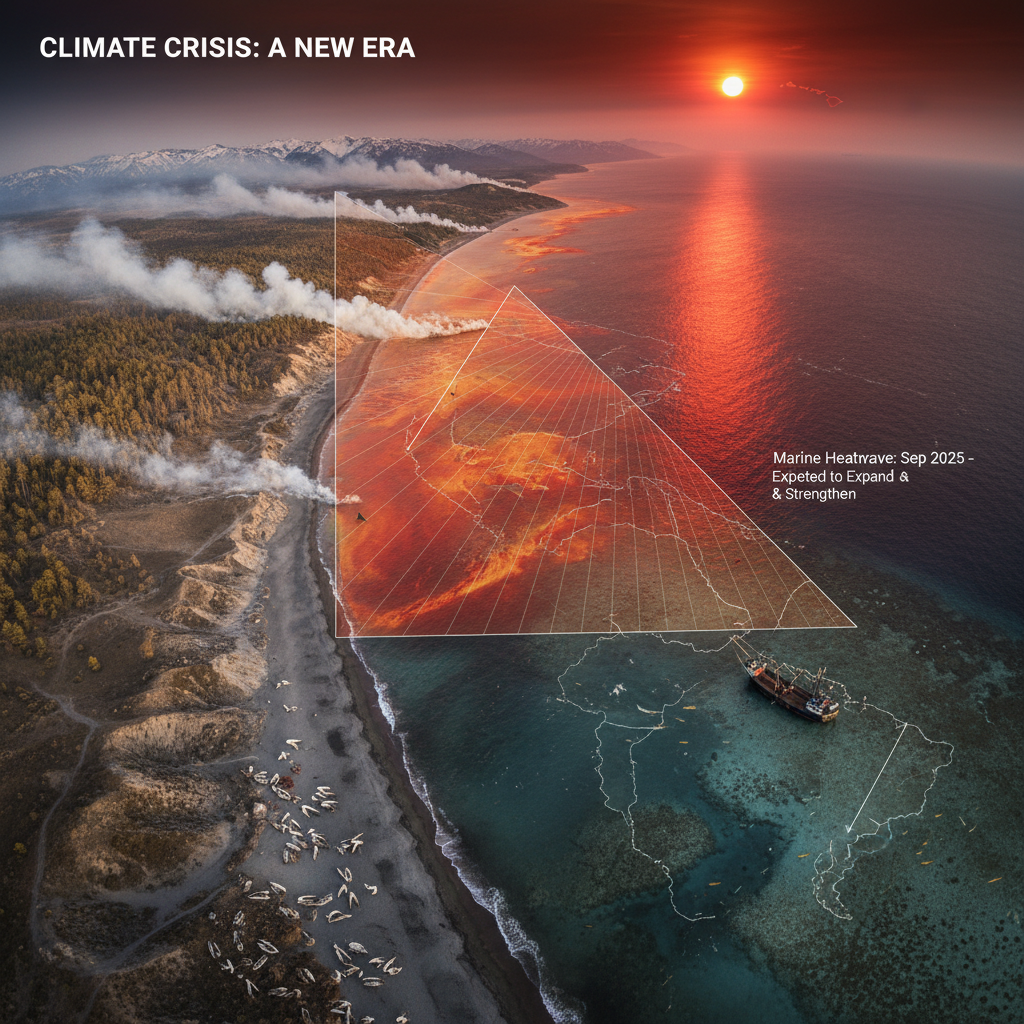
A colossal marine heatwave off the US West Coast is intensifying, alarming scientists with its accelerating ecological and environmental impacts. Stretching thousands of miles, it's driving extreme land temperatures, severe drought, increased wildfires, and devastating effects on marine life and food chains, exacerbated by a looming El Niño and human-caused climate change.
An enormous and persistent marine heatwave off the US West Coast is ringing alarm bells among ocean and atmospheric scientists as new data reveals its ecological and environmental effects are intensifying. This unusual area of warm water, which peaked in size in September 2025, still stretches thousands of miles from the California coastline, affecting a vast triangle-shaped region from Hawaii to British Columbia and southward to Mexico. Despite earlier hopes for its diminution, new NOAA projections indicate it is now expected to expand and strengthen in the coming months. Scientists are 'gobsmacked' by recent data, re-examining assumptions about how the complex interplay between the ocean and atmosphere could accelerate the effects of human-caused climate crisis. The heatwave has already contributed to shockingly extreme temperatures across most of the United States, including a 'most astounding global weather event' in March 2026 that sent late winter temperatures soaring more than 30F above seasonal norms. Over one-third of US weather stations, including hundreds of cities, set new all-time temperature records for March, capping the warmest winter on record in the west. This has led to unprecedented low snowpack, rapid drought intensification, and a high risk of wildfires from dry thunderstorms across California and the Pacific Northwest, with summer expected to be much warmer than normal. Beyond land-based impacts, scientists express alarm about devastating effects on marine life and ecosystems, recalling the 2015 'Blob' heatwave. Concerns include significant hits to salmon fisheries, mass mortality of seabirds (like pelicans abandoning nests due to lack of food), and profound shifts in species behaviors, such as great white sharks appearing in British Columbia waters. Research indicates a significant change in krill abundance during previous heatwaves, which could lead to widespread impacts across the marine food web this year. The situation is further complicated by a greater than two-in-three chance of a 'strong' or 'extreme' El Niño later this year. Emerging research highlights that the rapid-fire combination of marine heatwaves and El Niño is a symptom of human-caused climate crisis, with these events occurring more frequently and intensely, leaving insufficient time for ecosystems to recover.