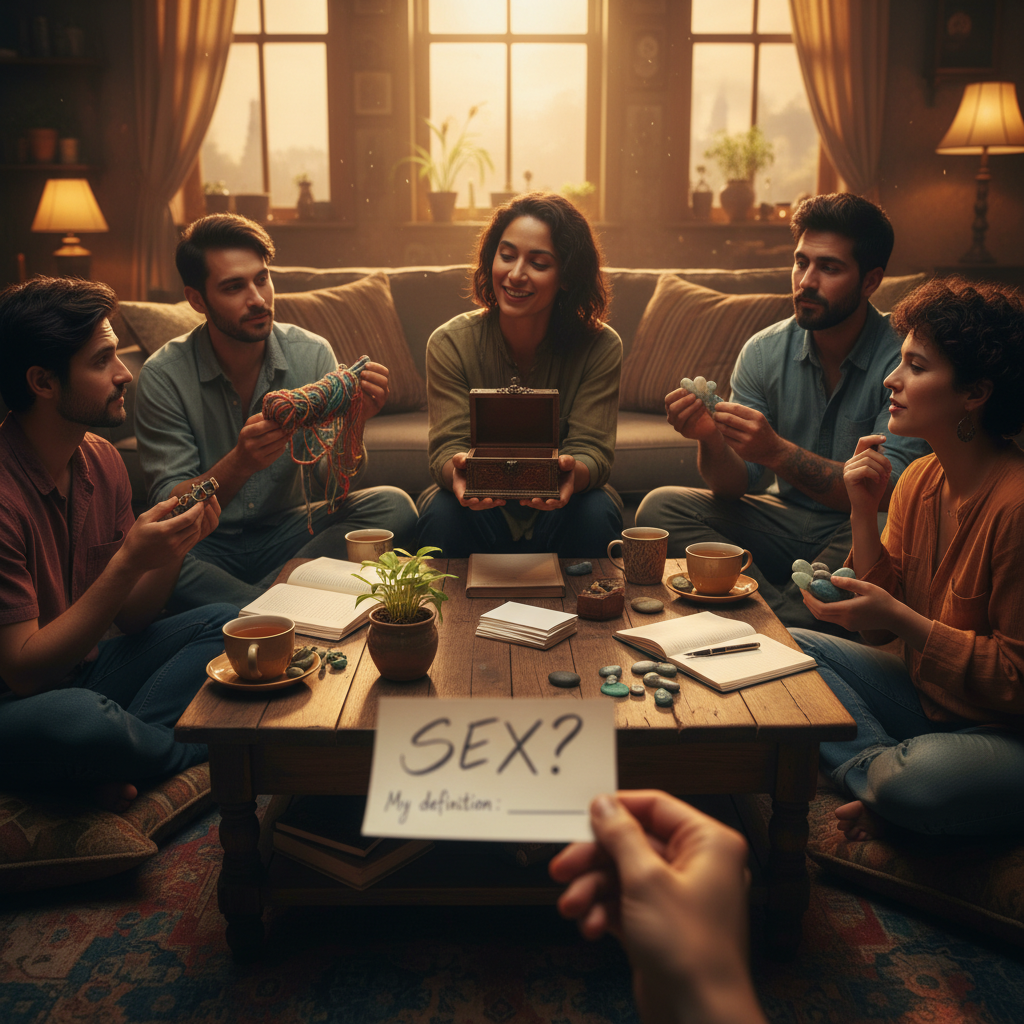
A sex educator challenges rigid, mainstream definitions of sex, encouraging individuals to explore and define what sex means to them personally, leading to more fulfilling and autonomous experiences.
This article, written by a sex educator, explores the complex question: 'What is sex?' It highlights how traditional, narrow definitions—often centered around penis-in-vagina penetration between a man and a woman—fail to encompass the vast diversity of human sexual experience. The author explains that their role is not to dictate a single answer, but to facilitate an investigation into personal ideas about sexuality, emphasizing that there's no inherent value in a 'body count' or a universal interpretation of concepts like abstinence or virginity. The piece argues that adhering to a singular definition can be limiting, unfulfilling, and even harmful, as it implicitly suggests 'right' and 'wrong' ways to engage sexually. It advocates for a pleasure-centered perspective, allowing individuals to define sex for themselves based on what feels consensual and enjoyable, rather than adhering to specific outcomes or rigid 'bases.' The article addresses potential confusion arising from diverse definitions, asserting that sex already exists outside traditional norms and that acknowledging this diversity fosters empathy, improves communication, and strengthens relationships. Ultimately, it champions the benefits of self-defining sex, including more pleasurable and aligned experiences, greater personal autonomy, and liberation, particularly for marginalized communities who have historically faced sexual disempowerment. It encourages readers to unearth their own desires and meanings around sex, just as they do in other areas of life.