JD Vance, a probable 2028 presidential candidate, details his transformative journey from an unchurched childhood and college atheism to Roman Catholicism in his new memoir 'Communion,' exploring how his faith shapes his conservative politics and its potential influence on America's future.
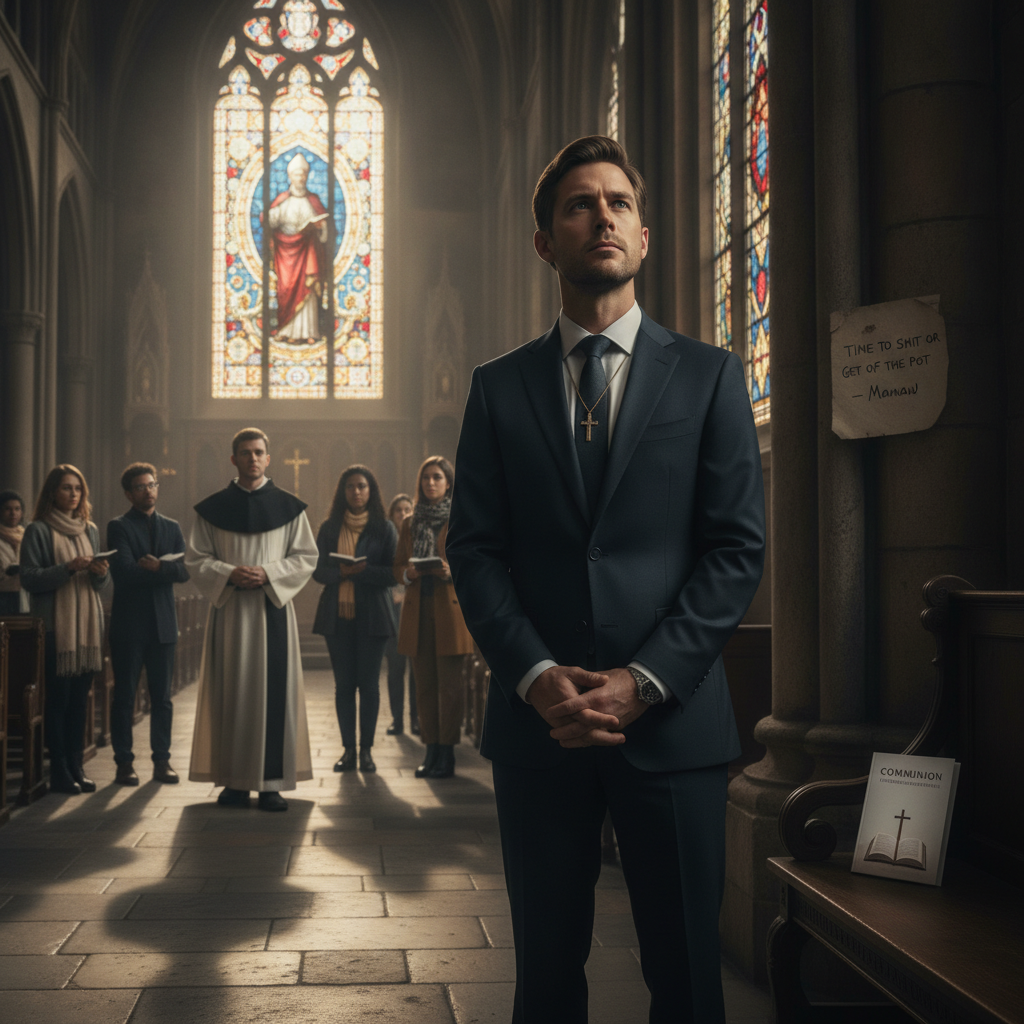
JD Vance's 2019 conversion to Roman Catholicism, chronicled in his new memoir 'Communion: Finding My Way Back to Faith,' marks a significant personal and political evolution. Raised in an unchurched Appalachian environment, exposed to his father's militant Pentecostalism, and later embracing atheism during his college years, Vance ultimately found solace and intellectual intrigue in the structure and orthodoxy of Catholicism, guided by Dominican friars. His grandmother's 'Time to shit or get off the pot' phrase metaphorically spurred his final decision. His conversion coincides with a unique period for American Catholicism. Despite being a minority faith, Catholicism has historically wielded considerable influence on American conservatism, a trend reinforced by figures like William F. Buckley Jr. and a majority of Catholic Supreme Court justices. Vance has emerged as a prominent avatar of a revitalized conservative Catholicism, even engaging in high-profile clashes with the Vatican over issues like immigration and anti-war stances, positioning him between his newly adopted faith's leader and his political ally, Donald Trump. The article notes a modest resurgence in US Catholic parishes, attracting young adults disillusioned by modern life and seeking meaning and structure. This 'bougie revival,' as some critics call it, appeals to those desiring a more orthodox, intellectually rigorous faith distinct from what they perceive as a 'church of nice.' Vance, now the 'most senior Catholic in the United States government' and a likely 2028 presidential candidate, embodies this shift, potentially becoming the first Republican Catholic president. Vance's personal narrative, from a chaotic childhood detailed in 'Hillbilly Elegy' to seeking order in faith, informs his views. He was drawn to Catholicism's intellectual depth, influenced by figures like Peter Thiel and guided by academic Dominican friars. Choosing St. Augustine as his patron saint, Vance sees himself as a 'civilizational warrior' addressing a decadent Western society, a theme echoed in his book's subtle leanings towards integralism – the idea that Catholic morality should influence government policy. While his political stances on issues like abortion have shown inconsistency, his faith is poised to be a defining element of his public life and a significant factor in shaping the future of American conservatism and the Catholic Church's role within it.