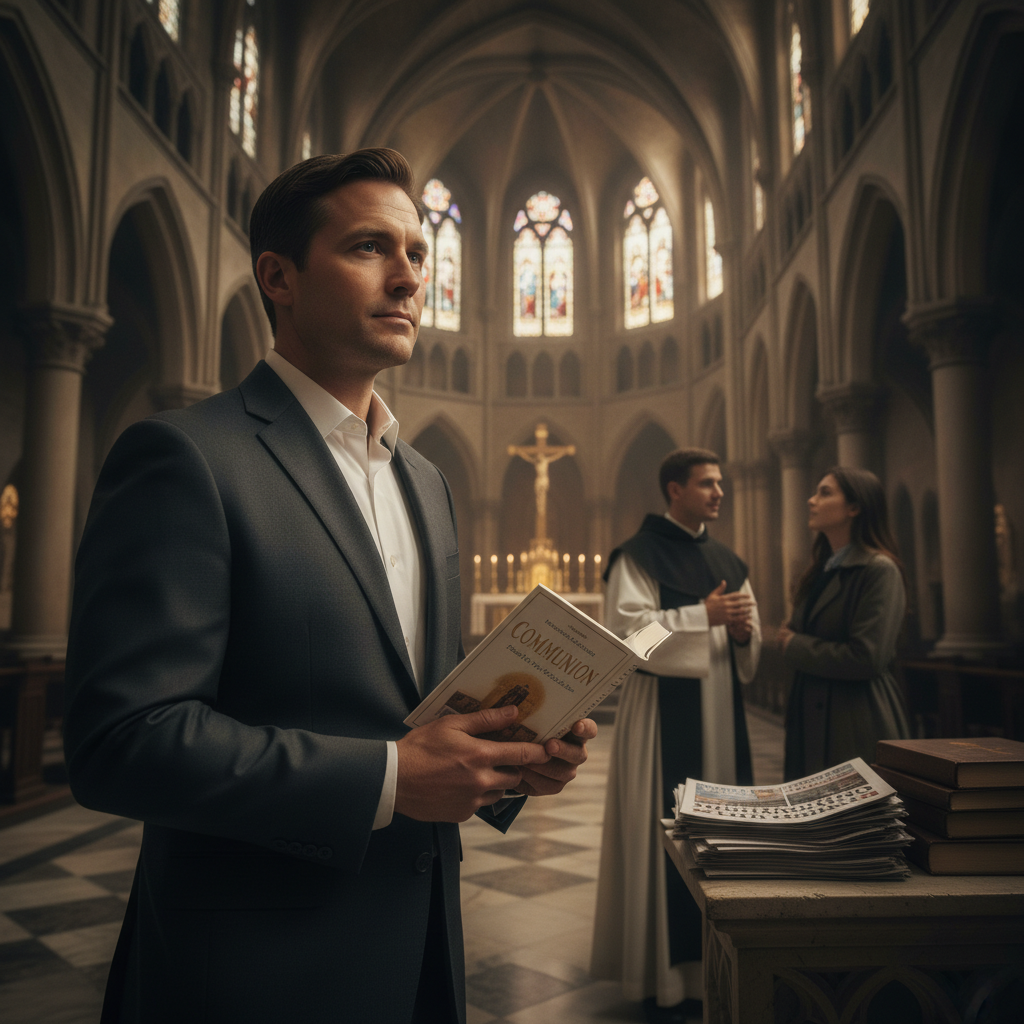
JD Vance, a prominent political figure and potential 2028 presidential candidate, details his surprising journey from an unchurched upbringing, through Pentecostalism and atheism, to Roman Catholicism in his new memoir, 'Communion.' His conversion highlights a growing trend of conservative Catholicism influencing American politics and culture, despite broader church declines and clashes with the Vatican.
JD Vance, who became Roman Catholic in 2019, recounts his complex spiritual evolution in his new memoir, 'Communion: Finding My Way Back to Faith.' Raised in Appalachia with a grandmother of casual faith, he briefly embraced his father's militant Pentecostalism before becoming an 'angry atheist' in college. His return to faith was sparked by intellectual curiosity and guided by Dominican friars, leading him to Catholicism, a move he felt his grandmother, despite her initial skepticism, would have urged him towards. Vance's conversion is significant within a broader context of American Catholicism. He has become a leading figure in a revitalized conservative Catholic movement, which, despite being a minority faith, wields outized influence on the American right, evident in figures like William F. Buckley Jr. and a majority of conservative Supreme Court justices. This movement, often allied with the MAGA agenda, has led to public clashes between Vance and Pope Francis, particularly over immigration. His book argues for a Catholic-influenced 'third way' to address America's perceived decline. While some Catholic parishes report a modest boom in new converts, often young adults seeking structure in a secular world, the church continues its overall decline in membership. Converts, like Vance, tend to be more conservative and drawn to orthodox, traditional forms of the faith, seeking distinctiveness from mainstream culture. Political scientists like Ryan Burge note that while high-profile conversions garner attention, the Catholic church overall struggles with conversion, and declines are widespread across Christian denominations. Vance, now the most senior Catholic in the US government and a probable 2028 presidential candidate, faces questions about how his faith will shape his political decisions. His book, while walking back some controversial remarks, gestures towards an 'integralist' perspective, where Catholic morality guides government, a pragmatic approach he believes can fix a 'decadent' Western society. His journey and his book offer a lens into the future of American Catholicism and its intersection with conservative politics.