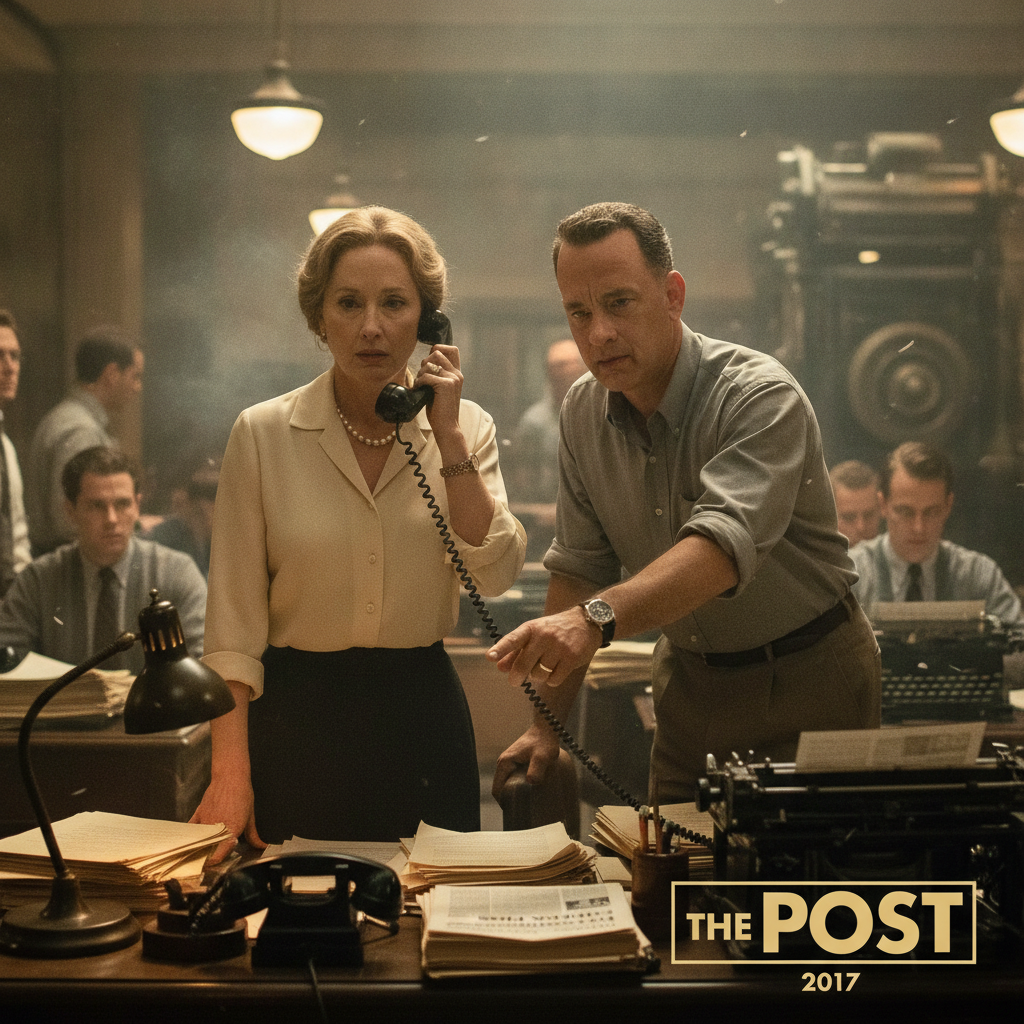
Steven Spielberg, known for avoiding politics, finally delivered a potent political statement with 'The Post,' a fast-paced tribute to journalism produced at breakneck speed and starring Meryl Streep and Tom Hanks.
Steven Spielberg, long perceived as apolitical and more interested in filmmaking mechanics than societal issues, surprised many with his 2017 film, 'The Post.' This marked a significant departure from his earlier career, taking him 40 years to produce a broadside against US foreign policy and drawing parallels to contemporary politics. The film, a 'cosy competency porn' for journalism, was greenlit and produced at astonishing speed, going from spec script in February 2017 to cinemas by December. While nominally about the Washington Post's handling of the Pentagon Papers, its core message is a powerful defense of journalists and their profession. Often compared to 'All the President's Men,' 'The Post' distinguishes itself with its breakneck pace, which Spielberg himself described as a 'chase film with journalists,' driven by John Williams's propulsive score. Meryl Streep delivers an 'effortlessly assured' performance as Katharine Graham, transforming the character's insecurity into a formidable strength, complemented by an impeccably chosen cast including Tom Hanks and rising stars like Jesse Plemons and Matthew Rhys. Despite its critical acclaim, the film took liberties with historical accuracy, particularly minimizing the New York Times' role, which drew criticism from their staff. Originally conceived to align with Hillary Clinton's potential election, the film's optimistic portrayal of journalism resonated with a different national mood. The article reflects on the film's release in 2017 as a nostalgic moment when grown-up dramas could thrive, and the ideals of 'truth' and 'the American way' were still celebrated in cinema, concluding that the film's rapid, high-quality production serves as a powerful tribute to the journalistic ideal itself.