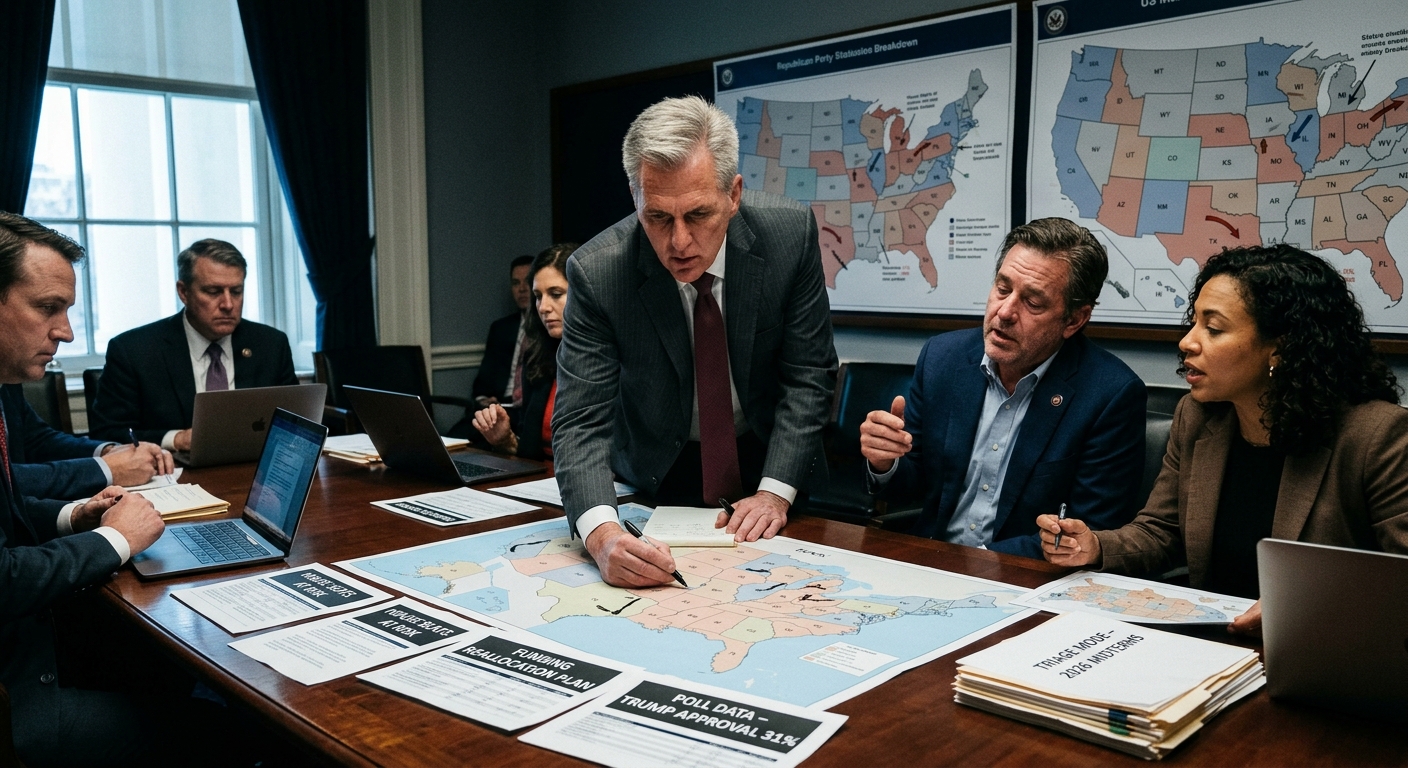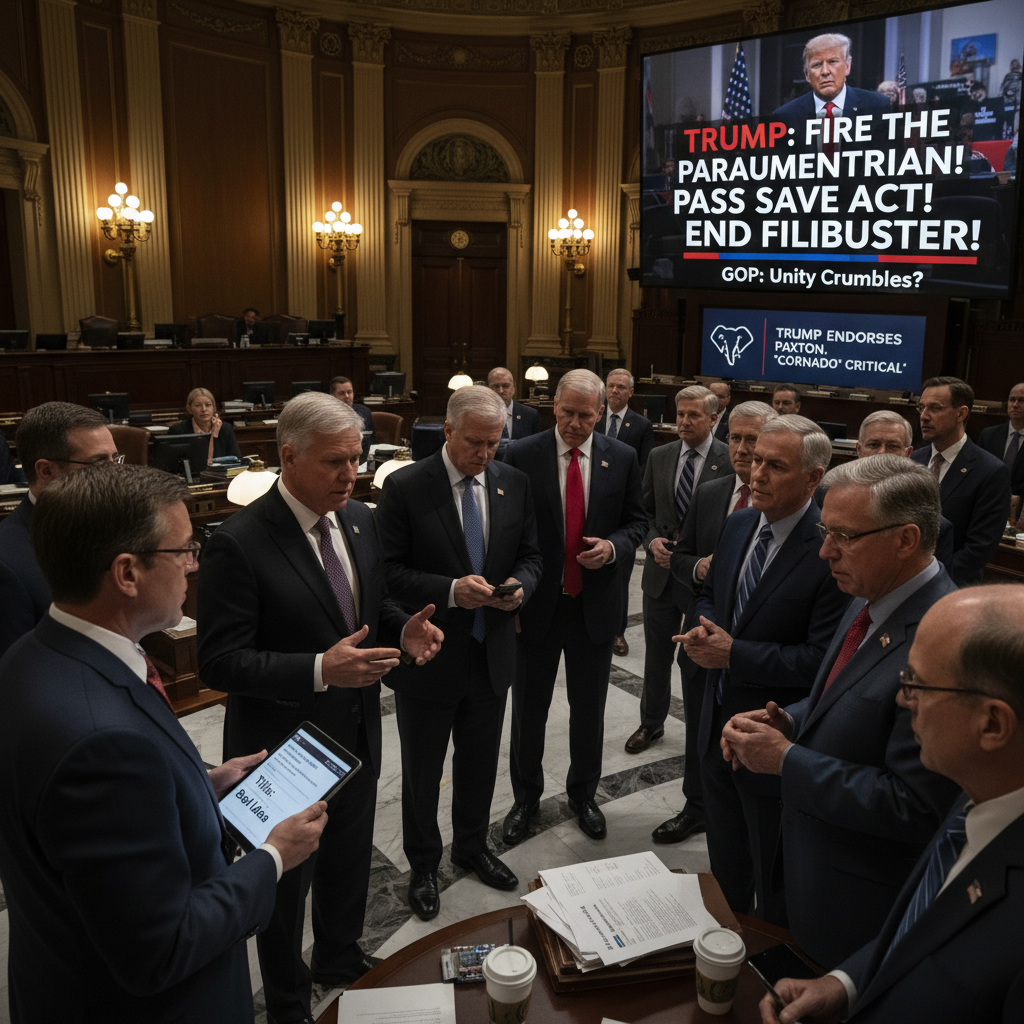
Republican senators are facing significant internal strife and external pressure while attempting to pass an immigration enforcement bill. Key obstacles include a faltering $1 billion White House security proposal, controversy over a $1.776 billion settlement fund for Trump's allies, and escalating tensions with President Trump over his political endorsements and demands, threatening GOP unity and legislative progress.
Republican senators are grappling with multiple contentious issues as they try to advance an immigration enforcement bill. A proposed $1 billion security package for the White House complex, including President Trump's ballroom, is losing Republican support, with some senators like Thom Tillis deeming it a 'bad idea' and the parliamentarian ruling against parts of it. Democrats have also criticized the spending amid voter concerns over affordability. Adding to the legislative hurdles is a $1.776 billion 'anti-weaponization' settlement fund, intended to compensate Trump allies. Democrats are preparing amendments to block or restrict this fund, potentially preventing payments to individuals involved in the Jan. 6 Capitol attack, while a growing number of Republicans also express reservations, prompting discussions for internal limits. Simultaneously, tensions between Senate Republicans and President Trump are escalating. Trump's endorsement of Texas Attorney General Ken Paxton over incumbent Sen. John Cornyn in an upcoming primary runoff has privately infuriated many GOP senators, who fear it could jeopardize their November majority. Trump has also publicly assailed Senate Republicans, urging them to fire the parliamentarian, pass the SAVE Act, and eliminate the filibuster, issuing threats about their job security. Despite these challenges, the underlying bill, which aims to fund ICE and Border Patrol, is being pushed through the reconciliation process, necessitating Republican unity and parliamentarian approval, both of which remain uncertain.