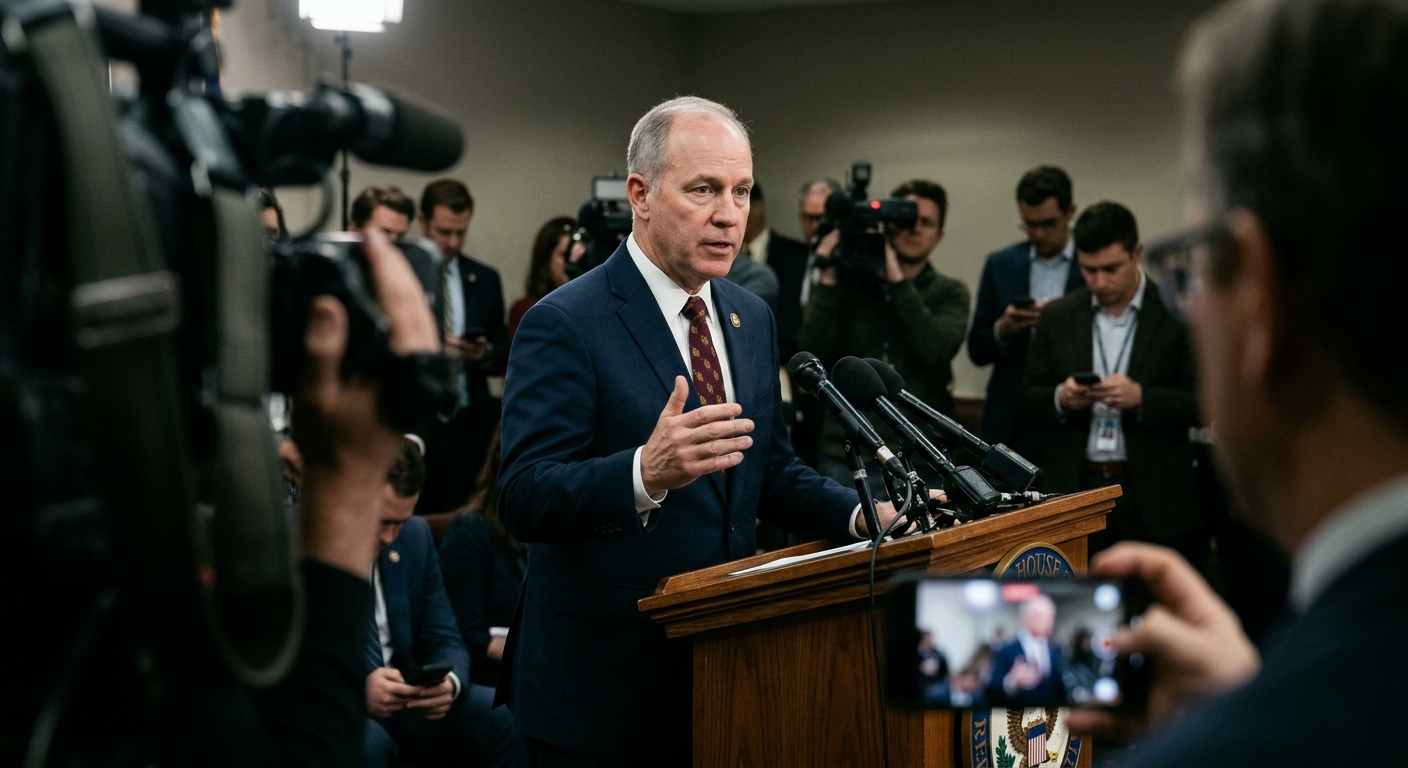
National Republican Congressional Committee Chairman Richard Hudson predicts the upcoming House midterm elections will be characterized not by 'blue' or 'red' waves, but by intense 'knife fights' in a limited number of districts, primarily due to past gerrymandering reducing swing seats.
National Republican Congressional Committee (NRCC) Chairman Richard Hudson (R-NC) asserts that the era of large 'wave' elections in House races is over for the remainder of the decade. Instead, he anticipates '30 knife fights in 30 dark alleys,' where a small number of races will be decided by just a few thousand votes. This shift is attributed to 'scorched-earth gerrymandering' post-2020, which has drastically reduced the number of swing districts, a dynamic expected to persist until the next census. Hudson contrasts this with previous cycles like 2018 (Democrats gained 41 seats) and 2010 (Republicans gained 64 seats), noting that the 2022 midterms saw Republicans net only 10 seats. Despite many pundits and prediction markets, such as Kalshi (giving Democrats an 84% chance of flipping the House), forecasting a Democratic takeover, Hudson is confident the GOP will hold its slim majority. He argues that prognosticators are ignoring 'facts on the ground' and 'actual polling' in competitive districts, highlighting that this midterm has the smallest map of truly 'up for grabs' seats ever, many of which are currently held by Democrats in states won by Donald Trump. The Cook Political Report currently favors Republicans with 209 seats to Democrats' 205, leaving 21 toss-up seats. Hudson also emphasized the GOP's significant financial advantage, noting that their substantial war chest is strategically deployed for paid advertising after Labor Day, when voter engagement peaks. He also offered a specific prediction, stating that Republican Michael Whatley will win North Carolina's critical Senate race against former Gov. Roy Cooper, despite current polls and ratings favoring Cooper.