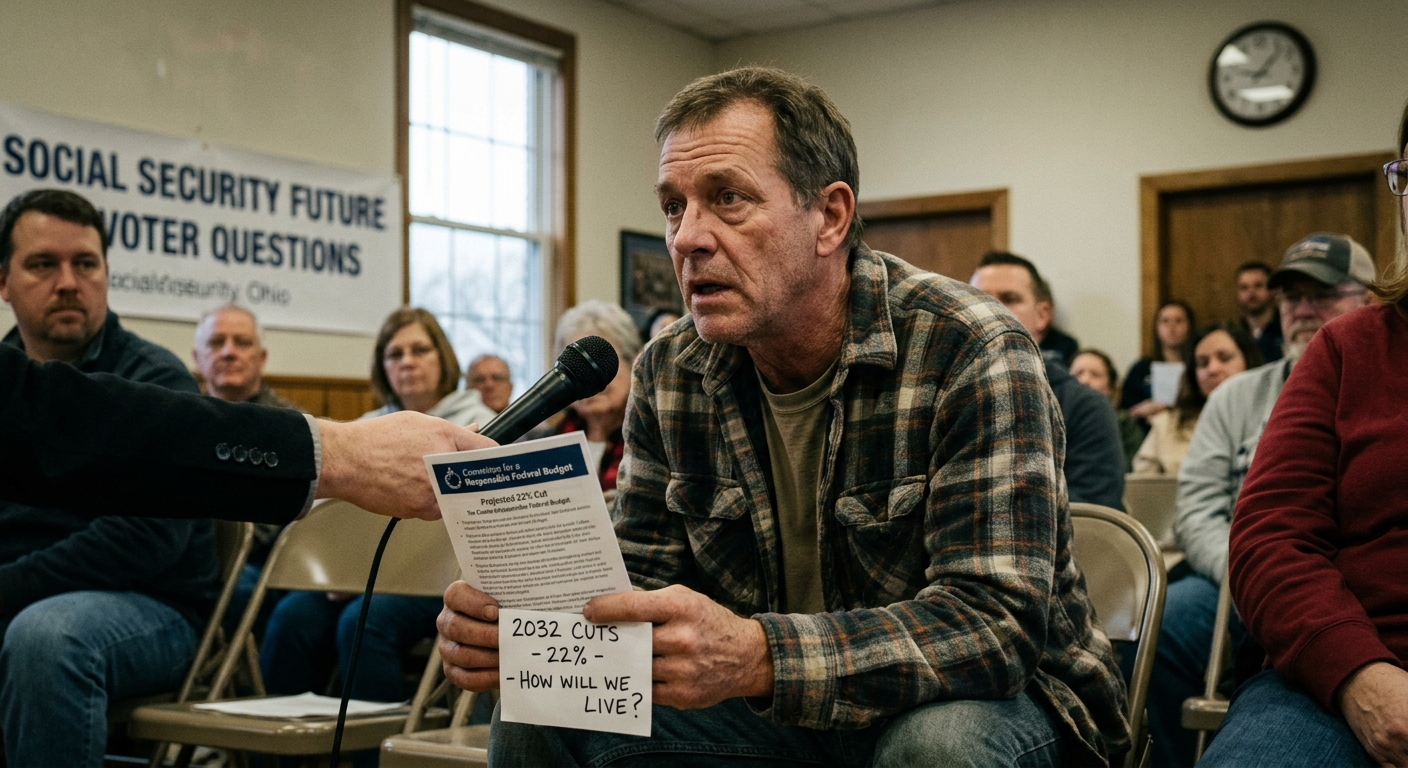
A new survey reveals that a vast majority of American voters in key battleground states are demanding explicit plans from midterm candidates to reform Social Security, fearing a projected 22% benefit cut for all beneficiaries by late 2032 if no action is taken. Voters overwhelmingly prefer candidates with solutions over those promising to leave the program untouched, with strong support for specific policy changes but firm opposition to using national debt.
Americans are urgently demanding answers from midterm candidates regarding the future of Social Security, with a vast majority of voters in key Senate battleground states favoring candidates who present explicit reform plans. A nationwide survey by the Peterson Foundation found that over 80% of registered voters prefer representatives with a strategy to prevent automatic benefit reductions, compared to just 17% who favor candidates promising to leave the program untouched. The urgency is driven by a critical financial deadline: the Social Security Board of Trustees projects the trust fund will run dry by late 2032. Without congressional intervention, this shortfall will trigger an immediate 22% pay cut for all beneficiaries. Senators elected in this cycle will be in office when this depletion occurs, intensifying the weight of the upcoming elections. Michael Peterson, CEO of the Peterson Foundation, emphasized that candidates must offer solutions to prevent this 'catastrophic result.' An analysis by the Committee for a Responsible Federal Budget (CRFB) indicates that 63 million Americans, including 54 million retirees and 9 million dependents/survivors, would be affected, facing an average national loss of approximately $500 per recipient per month. Critical battleground states like Texas, Ohio, Michigan, North Carolina, and Georgia would see millions of residents impacted by significant monthly reductions. Once informed of the 2032 cut projections, 91% of respondents supported structural reforms, and 85% cited persistent inflation as making the funding shortfall resolution urgent. The survey revealed strong backing for various policy changes to ensure the program's solvency: 72% favored adding a 1% payroll tax on income over $184,500; two-thirds supported capping annual benefits at $100,000 per retired couple; and 65% backed benefit cuts for the top 20% of earners, with an equal percentage favoring a combination of gradual benefit changes and tax increases. Voters, however, drew a firm line against using national debt to cover the gap, with 68% explicitly opposing adding to the $40 trillion national deficit.